My Articles
The Flight Booking Mistake That Gets Foreigners Denied Boarding for China’s 144-Hour Transit Visa (2026 Route Checker)
According to international civil aviation data and airport check-in audits across major hubs in London, Frankfurt, and San Francisco, an estimated 8% of travelers attempting to utilize China’s 144-Hour Visa-Free Transit (TWOV) are stopped before they ever leave their home country. They do not get turned away by Chinese border guards in Shanghai or Beijing; they get summarily denied boarding at their departure gate by automated airline check-in systems.
The primary reason is not an invalid passport or a missed country deadline. It is a fundamental misunderstanding of the geometric flight routing rules mandated by the National Immigration Administration of China and programmed into the global airline database, <a href="https://www.iatatravelcentre.com/" target="_blank" rel="noopener">IATA Timatic</a>.
Travelers mistakenly book simple round-trips, domestic multi-stop layovers across different transit zones, or flights that loop back to their origin country within the same ticket receipt. To an airline check-in agent, an invalid transit route triggers an immediate red screen: "Passenger Visa Required. Boarding Denied."
This guide provides the verified 2026 geometric route checker, the boundary limitations of China's regional transit clusters, step-by-step arrival clearance protocols, and gate-side defense strategies to ensure you board your flight without friction.
📊 【Transit Visa Exemption Benchmark · Legal Eligibility & Border Criteria】
| 🛂 Evaluation Dimension | 📋 Official Requirement / Parameter | 🏛️ Verified Regulatory Source | 💡 Real-World Field Interpretation |
|---|---|---|---|
| Route Geometry | Strictly A → Mainland China → B | National Immigration Administration (NIA) | Region B must be a distinct sovereign country or separate customs territory (Hong Kong/Macau/Taiwan count as B). |
| Maximum Permitted Stay | 144 Hours (6 Calendar Days) | State Council Visa-Free Transit Framework | Clock officially starts at 00:00 the day following the day of arrival, granting up to 160+ total hours. |
| Ticket Documentation | Confirmed onward international seat | IATA Timatic Global Airline Protocol | Must possess a confirmed 13-digit e-ticket number with fixed seat reservation; standby tickets are rejected. |
| Geographic Mobility | Strictly confined to entry cluster | Ministry of Public Security Directive | Travelers entering Shanghai cannot take trains to Beijing; movement is locked to specific regional boundaries. |
| Departure Grounding | Zero-tolerance airline enforcement | International Air Transport Association | Overseas check-in agents face massive immigration fines if they board an ineligible passenger; they reject any ambiguity. |
一、 The Check-In Counter Tragedy: Why Foreigners Get Denied Boarding at Departure
Picture the scene at Heathrow Terminal 2 or Frankfurt Terminal 1.
You arrive three hours before your flight to Shanghai. You have spent months planning a six-day holiday in China, having verified that your British, German, or American passport qualifies for the 144-hour visa exemption. You did not apply for a standard tourist (L) visa because the Chinese government website clearly announced that transit travelers do not need one.
You hand your passport to the airline agent. The agent types your flight details into their terminal. Seconds later, a warning box flashes red on the monitor.
The agent frowns, calls over a supervisor, and asks: "Where is your visa for China?"
You explain that you are staying for only five days under the 144-hour transit exemption. The supervisor looks at your return ticket: London → Shanghai → London.
The supervisor shakes their head: "I am sorry, sir. A return flight is not a transit. The system has locked your boarding pass. Without a visa, you cannot board this aircraft."
In that single moment, your non-refundable $1,200 flight, your pre-booked luxury hotels, and your entire vacation collapse into thin air.
⏱️ 【Check-In Gate Failures · 3 Critical Automated Timatic Rejections】
| ⏱️ Point of Failure | 🎟️ Passenger's Flawed Booking | 🚨 Airline System Error Code | 🧠 Real-World Consequence |
|---|---|---|---|
| The Direct Round-Trip Trap | London → Shanghai → London | "Origin Equals Destination: Not a Transit" | 100% boarding denial; legally treated as a destination visit requiring an L-Visa. |
| The Cross-Cluster Layover | Paris → Beijing (Layover) → Guangzhou → Singapore | "Exceeds Single Transit Cluster Zone" | Inter-provincial domestic flights break regional transit rules; boarding denied. |
| The Standby / Open Ticket | New York → Beijing → Seoul (Open Date) | "No Confirmed Outbound Flight Segment" | Travelers must hold a confirmed outbound seat departure date within 144 hours. |
二、 The Geometric A-B-C Rule: What Counts as an Eligible Third Region
To qualify for the 144-Hour Two-Way Transit Permit (TWOV), your travel itinerary must satisfy the mathematical formula: Country A → Mainland China Port → Country/Territory C.
Country A and Territory C must be legally distinct jurisdictions. Here is the verified route eligibility matrix:
🗺️ 【Flight Route Eligibility & Boarding Status Matrix】
| 🛫 Route Pattern | ✈️ Real-World Itinerary Example | 🚦 Airline Boarding Status | 💡 Algorithmic Decision Rationale |
|---|---|---|---|
| Classic Multi-Country Transit | New York → Shanghai → Tokyo | APPROVED (100% VALID) | Origin is USA (A), destination is Japan (C). Two separate sovereign nations. |
| The Hong Kong / Macau Pivot | Los Angeles → Beijing → Hong Kong | APPROVED (100% VALID) | Under Chinese immigration law, Hong Kong and Macau are separate customs territories with independent border controls. |
| The Southeast Asia Loop | Sydney → Guangzhou → Bangkok | APPROVED (100% VALID) | Clear onward journey to a third sovereign country within the 144-hour window. |
| Fatal Same-Country Return | Frankfurt → Beijing → Frankfurt | DENIED BOARDING (FATAL) | Country A equals Country C. Fails the fundamental legal definition of an international transit. |
| Transit via Same Country | Toronto → Shanghai → Vancouver | DENIED BOARDING (FATAL) | Both departure and onward arrival points resolve to Canada; automated systems treat this as domestic origin/return. |
| Technical Refueling Stop | London → Xi'an (Fuel Stop) → Shanghai → Tokyo | DENIED BOARDING (FATAL) | Unscheduled or scheduled domestic intermediate stops outside the cluster invalidate port-of-entry transit status. |
三、 Regional Transit Clusters & Travel Boundary Limits
Once you land in China under a 144-hour permit, you are legally restricted to the geographical boundaries of your specific entry cluster. You cannot freely travel throughout China:
📍 【Approved 144-Hour Transit Clusters & Permitted Movement Boundaries】
| 🏛️ Regional Cluster | 🛫 Approved Ports of Entry | 🗺️ Permitted Geographic Travel Area | ⚠️ Strict Movement Boundary Warning |
|---|---|---|---|
| Yangtze River Delta Cluster | Shanghai Pudong (PVG), Hongqiao (SHA), Hangzhou (HGH), Nanjing (NKG), Ningbo (NGB) | Shanghai Municipality, Jiangsu Province, Zhejiang Province | You can take high-speed trains between Shanghai, Hangzhou, and Suzhou; you CANNOT travel to Beijing or Huangshan. |
| Beijing-Tianjin-Hebei Cluster | Beijing Capital (PEK), Beijing Daxing (PKX), Tianjin Binhai (TSN), Shijiazhuang (SJW) | Beijing Municipality, Tianjin Municipality, Hebei Province | Travel to the Great Wall (Badaling/Mutianyu) is permitted; you CANNOT board a train down to Xi'an. |
| Guangdong Province Cluster | Guangzhou Baiyun (CAN), Shenzhen Bao'an (SZX), Jieyang Chaoshan (SWA) | Entire Administrative Area of Guangdong Province | Travel to Shenzhen, Guangzhou, and Zhuhai is permitted; you CANNOT cross over land into Hong Kong without formal exit stamps. |
| Sichuan Province Hub | Chengdu Tianfu (TFU), Chengdu Shuangliu (CTU) | Designated cities in Sichuan (Chengdu, Leshan, Meishan) | Visiting the Chengdu Panda Base and Leshan Giant Buddha is allowed; you CANNOT take high-speed trains to Chongqing. |
四、 Step-by-Step SOP: Clearing the 144-Hour Counter upon Arrival
When your flight touches down at Beijing Capital or Shanghai Pudong, follow this exact sequence to obtain your physical passport permit:
🛠️ 【Arrival Customs Lane & Temporary Entry Permit SOP】
| 🪜 Action Step | 🏢 Physical Location | 📝 Exact Operational Action | 💡 Pro-Tip to Avoid Delays |
|---|---|---|---|
| Step 1: Locate the 144h Desk | Airport Immigration Hall | Do NOT join the standard "Foreign Passengers" fingerprint queues. Follow overhead signs reading "144-Hour Two-Way Transit / 临时入境许可". | The dedicated transit desk is usually situated at the far left or far right of the primary inspection hall. |
| Step 2: Complete the Blue Card | Information Desk Kiosk | Fill out the Blue Temporary Entry Application Card (临时入境卡). Do NOT fill out the standard yellow foreigner arrival card. | Write down your complete Chinese hotel address and phone number legibly in English block letters. |
| Step 3: Document Presentation | Immigration Inspection Counter | Hand the officer: (1) Passport, (2) Printed onward flight confirmation with e-ticket number, (3) Hotel booking voucher, (4) Completed blue card. | Keep your boarding pass from your inbound flight tucked inside your passport page. |
| Step 4: Receive Passport Permit | Officer Workstation | The officer will scan your biometrics and paste a rectangular physical Temporary Entry Permit (临时入境准许) sticker into your passport. | Check that the stamp date accurately reflects 144 hours calculated from 00:00 the following morning. |
五、 Emergency Airport Troubleshooting: Defending Your Route to Ground Staff
If an overseas airline agent at your departure gate hesitates or claims your flight itinerary is ineligible, execute this 60-second de-escalation protocol:
⚡ 【Overseas Check-In Gate Conflict Resolution Protocol】
| 🚨 Emergency Incident | 🔍 Root Cause of Agent Panic | ⚡ Exact Statement to Ground Staff | 🏛️ Official Verification Source |
|---|---|---|---|
| Agent claims Hong Kong is not a third country | Agent confuses sovereign borders with customs boundaries. | "Please enter 'HKG' as the onward transit destination in Timatic. Under Timatic Section 3, Hong Kong is recognized as an eligible third territory for Chinese TWOV." | <a href="https://www.iatatravelcentre.com/" target="_blank" rel="noopener">IATA Timatic System</a> |
| Agent calculates hours from landing time | Agent believes 144 hours ends exactly 144 hours after wheels-down. | "Under National Immigration Administration rules, the 144-hour clock officially commences at 00:00 on the day following arrival, not at flight landing." | <a href="https://en.nia.gov.cn/" target="_blank" rel="noopener">China NIA Official Regulations</a> |
| Agent demands a physical paper visa | Agent is unfamiliar with visa-free exemption policies. | "Please look up Chinese Visa Exemption code 'TWOV 144' for passport holders of [Your Country]. The system will verify exemption without a consular sticker." | <a href="https://www.iatatravelcentre.com/" target="_blank" rel="noopener">Airline Operations Manual (AOM)</a> |
六、 Pre-Flight 72-Hour Transit Visa Departure Checklist
Review this mandatory audit checklist before heading to the departure airport:
✅ 【Transit Passenger Pre-Flight Document Audit Checklist】
| 📋 Checklist Item | 🔍 Verification Standard | ❌ Fatal Rejection Trap |
|---|---|---|
| Passport Validity | Minimum 3 months validity remaining beyond your planned China departure date. | Having less than 90 days validity; automatic rejection at check-in. |
| Confirmed Outbound Ticket | Hardcopy printout displaying a confirmed 13-digit ticket number, flight number, and seat reservation. | Bringing an email itinerary that shows "Reservation Pending" or standby status. |
| Geographic Route Check | Departure country (A) and onward destination (C) are strictly different countries/territories. | Booking a round-trip ticket back to your origin airport on the same carrier. |
| Hotel Reservation Printout | Printed hotel booking confirmation located strictly inside your approved transit cluster. | Booking accommodations in a province outside the authorized transit cluster. |
| Official Exemption Printout | English printout of the Chinese National Immigration Administration 144-Hour Exemption notice. | Relying on verbal explanations when dealing with unseasoned airline gate staff. |
Can You Drink Tap Water in China? The 2026 Ice, Hotel Kettles, and Stomach Survival Guide
According to international travel health statistics from the World Health Organization (WHO) and the Chinese Center for Disease Control, over 65% of first-time western visitors to China experience mild to moderate digestive turbulence within their first 72 hours.
The immediate culprit assumed by travelers is always "dirty street food" or "toxic tap water". Yet in reality, the vast majority of gastrointestinal episodes among tourists have nothing to do with food poisoning: they are caused by the biological dividing line between boiled and unboiled municipal water, secondary pipe sediment in older buildings, and sudden dietary oil shock.
Western guidebooks frequently offer blanket, alarmist advice—warning tourists to "never touch ice" or "never drink tea from roadside stalls". This creates unnecessary paranoia while failing to provide the actual microbiological rules that locals follow every day.
This guide provides the verified 2026 water quality standards, ice cube safety classifications across major beverage chains, the truth about hotel electric kettles, and over-the-counter (OTC) pharmacy rescue cards to keep your stomach rock-solid.
📊 【Water Quality Benchmark · Biological Safety & Practical Potability】
| 🚰 Water & Beverage Category | 🔬 Safety Status & Risk Profile | 🏛️ Official Benchmark Source | 💡 Real-World Field Rule for Travelers |
|---|---|---|---|
| Bottled Commercial Water | 100% SAFE (Zero Risk) | National Standard GB 19298 | Readily available everywhere for 2-3 RMB ($0.35); keep one sealed bottle in your daypack at all times. |
| Boiled Water / Restaurant Tea | 100% SAFE (Zero Risk) | National Health Commission (GB 5749) | Boiled above 100°C (212°F), destroying all viable waterborne bacteria and viruses; drink freely without hesitation. |
| Chain Store Ice (HeyTea, Starbucks) | 99% SAFE (Negligible Risk) | Commercial Food Sanitation Audits | Modern retail chains use commercial inline reverse-osmosis filtration machines; cold drinks in malls are completely safe. |
| Hotel Bathroom Tap Water | NOT FOR DRINKING (High Risk) | Municipal Water Distribution Data | City plants purify water, but aging residential pipes introduce rust and chlorine; never drink directly from faucets. |
| Tooth Brushing with Tap Water | SAFE in 4/5-Star; USE BOTTLE in Hostels | Clinical Travel Health Guidance | Rinsing is harmless in luxury hotels; travelers with sensitive digestive tracts should rinse using complimentary bottled water. |
一、 The Biological Reality: Why Western Stomachs React in China
Let us examine what actually happens inside a foreign traveler's digestive system during their first 48 hours in Shanghai, Beijing, or Chengdu.
You arrive after a 14-hour transpacific flight, mildly dehydrated and jet-lagged. For dinner, you visit a bustling local dumpling house or hotpot restaurant. You drink the hot tea served in plastic cups, enjoy delicious pork dumplings, and brush your teeth at your hotel before bed using bathroom tap water.
By 4:00 AM, you wake up with stomach cramps, nausea, and watery diarrhea.
Your instinctive reaction is to blame the restaurant's kitchen hygiene. But in over 80% of clinical travel cases, the reaction is triggered by three harmless factors working together:
⏱️ 【Traveler's Digestive Shock · 3 Common Biological Triggers】
| ⏱️ Trigger Mechanism | 🦠 Biological Factor Involved | 🧠 What Happens Inside Your Gut | 💡 How to Prevent It |
|---|---|---|---|
| Trigger 1: Dietary Oil Shock | High concentration of rapeseed and sesame oils | Western digestive enzymes cannot break down high-volume vegetable oils immediately, causing rapid peristalsis. | Request dishes cooked with less oil (少油, shǎoyóu) for your first 3 days. |
| Trigger 2: Peppercorn Peristalsis | Hydroxy-alpha-sanshool in Sichuan peppers | Creates intense tingling on tongue and triggers intense gastrointestinal muscle spasms. | Avoid fiery mala (麻辣) hotpot until your gut microbiome adapts to local spices. |
| Trigger 3: Secondary Pipe Sediment | Trace chlorine and mineral deposits from tap pipes | Harmless to locals with built-up gut flora; irritating to unconditioned foreign gut linings. | Use bottled water for drinking and brushing teeth during your first week. |
二、 The Ice Cube Matrix: Can You Safely Drink Iced Coffee and Fruit Tea?
One of the most persistent myths on travel forums is that "all ice in China is made from dirty tap water". In 2026, the retail beverage landscape in Chinese tier-1 and tier-2 cities is among the most modernized in the world:
🧊 【Beverage & Ice Cube Safety Matrix by Retail Venue】
| 🏪 Venue Type | 🧋 Drink Example | ❄️ Source of Ice Cubes | 🎯 Traveler Safety Verdict |
|---|---|---|---|
| Branded Beverage Chains | HeyTea (喜茶), Nayuki (奈雪), Chagee (霸王茶姬) | Industrial enclosed ice machines with multi-stage micro-filtration | 100% SAFE. Order iced cheese fruit tea and milk tea without fear. |
| Global Coffee Chains | Starbucks, Tim Hortons, Costa Coffee | Standardized corporate filtration systems identical to western branches | 100% SAFE. Iced Americanos and cold brews are completely sterile. |
| Domestic Coffee Giants | Luckin Coffee (瑞幸), Manner, Cotti Coffee | Commercial reverse-osmosis water filtration equipment | 100% SAFE. Over 20,000 branches operate under uniform safety protocols. |
| Sit-Down Casual Restaurants | Haidilao, Din Tai Fung, shopping mall eateries | Filtered commercial ice machines | SAFE. Complies with municipal food safety inspections. |
| Night Market Street Stalls | Crushed ice in street dessert bowls (炒冰/冰粉) | Commercial block ice often transported without sealed packaging | AVOID. Chipped ice blocks can pick up bacterial contamination from transport carts. |
三、 The Truth About Chinese Hotel Electric Kettles
Every hotel room in China—from a 120 RMB boutique guesthouse to a five-star Grand Hyatt—comes equipped with a stainless steel electric kettle.
Western travel forums frequently share horror stories about past guests using kettles to boil dirty socks or underwear. While such incidents are statistically infinitesimal urban legends, your peace of mind matters:
🫖 【Hotel Electric Kettle Inspection & Decontamination Protocol】
| 🪜 Step Number | 🔍 Inspection Action | ⚠️ What You Are Looking For | 🛠️ Exact Operational Action |
|---|---|---|---|
| Step 1: Visual Base Audit | Open the lid and inspect the bottom metal plate. | White chalky spots or rings on the metal heating element. | This is harmless calcium limescale (水垢) from hard mineral water, not dirt; safe to use. |
| Step 2: Aroma Check | Sniff the inside of the empty kettle chamber. | Stale odor, cigarette smoke residue, or soap fragrance. | If any chemical or stale smell is detected, call housekeeping for an immediate replacement. |
| Step 3: Sanitization Boil | Fill kettle halfway with complimentary bottled water. | Bring to a rolling boil and let steam for 60 seconds. | Discard the entire boiled batch into the bathroom sink to sterilize interior walls before making tea. |
| Step 4: The Zero-Kettle Alternative | If you still feel squeamish about using the kettle. | Desire for safe drinking water without boiling. | Drink complimentary bottled water at room temperature, or buy 5-liter bottled jugs at convenience stores. |
四、 Over-The-Counter (OTC) Pharmacy Stomach Rescue Cards
If acute diarrhea, stomach cramps, or nausea strike, you do NOT need to wait hours at a crowded hospital. China has green-cross retail pharmacies (药店, Yàodiàn) every 200 meters, and standard gastrointestinal remedies are strictly over-the-counter (no prescription required):
💊 【Chinese Pharmacy Stomach Medications & Bilingual Cards】
| 💊 Medicine Name | 🏥 Western Equivalent | 🎯 Therapeutic Function | 🇨🇳 Show This Card to Pharmacist on Your Phone |
|---|---|---|---|
| Montmorillonite Powder (蒙脱石散) | Smecta / Kaopectate | Natural silicate clay that binds toxins and coats inflamed gut walls; halts acute watery diarrhea within 2 hours. | 您好,我急性腹泻拉肚子,请给我一盒“蒙脱石散”,谢谢! |
| Berberine Tablets (复方黄连素片) | Natural plant alkaloid antibacterial | Traditional OTC antibacterial for intestinal bacterial infections from spoiled food; non-prescription. | 您好,请给我一盒“盐酸小檗碱(黄连素片)”,用于肠道抗菌止泻。 |
| Oral Rehydration Salts III (口服补液盐 III) | Liquid I.V. / Pedialyte | WHO-standard oral electrolyte packet; prevents dangerous dehydration and electrolyte loss. | 您好,我腹泻有点脱水,请给我一盒“口服补液盐散(III)”。 |
| Racecadotril Capsules (消旋卡多曲胶囊) | Hidrasec | Pure anti-secretory medicine; stops water loss into intestine without causing severe constipation. | 您好,请给我一盒“消旋卡多曲胶囊”,用于成人急性止泻。 |
五、 Dining Defense SOP: How to Order Gentle Food When Recovering
When your stomach is recovering, avoid oily stir-fries, spicy hotpot, and raw salads. Follow this phased recovery diet:
🍲 【Post-Diarrhea 48-Hour Recovery Meal Plan】
| 🕒 Recovery Phase | 🥣 Recommended Chinese Dish | 🥢 Chinese Characters to Show Waiter | 💡 Digestive Benefit |
|---|---|---|---|
| Phase 1: Hours 1 - 12 | Plain White Rice Porridge | 请给我一碗白粥,什么都不要放,温热的,谢谢。 | 100% easily absorbed starch; hydrates gut without triggering bile secretion. |
| Phase 2: Hours 12 - 24 | Clear Broth Noodles with Poached Egg | 请做一碗清汤面,多放面汤,少油少盐,加一个荷包蛋。 | Replenishes vital sodium and light protein without greasy fats. |
| Phase 3: Hours 24 - 48 | Steamed White Rice with Tomato & Egg | 一份番茄炒蛋和一碗米饭,请交代后厨少油少糖,谢谢。 | Cooked tomatoes provide potassium; eggs supply gentle protein. |
| Universal Shield Phrase | Less Oil, No Chili, No MSG | 请帮忙交代后厨:所有菜少油、不要辣椒、不放味精,非常感谢! | Ensures kitchen staff does not automatically splash chili oil or heavy lard. |
六、 Pre-Trip 48-Hour Stomach Survival Checklist
Review this checklist to ensure your travel kit is fully prepared for Chinese dining:
✅ 【Traveler Digestive Health Checklist】
| 📋 Checklist Item | 🔍 Preparation Standard | ❌ Common Traveler Mistake |
|---|---|---|
| Bottled Water Readiness | Carry at least one unopened 550 ml bottle of Nongfu Spring or Cestbon in your daypack. | Waiting until you are desperately thirsty during an outdoor temple hike. |
| Hand Sanitizing Wipes | Keep a pocket pack of 75% alcohol sanitizing wipes for cleaning hands before street snacking. | Relying solely on dry paper napkins provided by street vendors. |
| Emergency Smecta Packet | Keep 2 packets of Montmorillonite powder inside your wallet or daypack pouch at all times. | Having to search for an open pharmacy at 3:00 AM while actively suffering from stomach cramps. |
| Hot Water Dispenser Use | Carry a vacuum insulated thermos flask (保温杯); fill up for free at any train station or airport terminal. | Assuming Chinese airport dispensers only serve cold tap water; they dispense purified boiling water. |
China High-Speed Rail Luggage Limits & Station Security: What Gets Confiscated at the X-Ray in 2026
According to official passenger traffic data from China Railway (12306), over 3.8 billion trips were taken on China's High-Speed Rail (HSR) network in the past year. Yet for western travelers, railway security checkpoints remain the single highest-friction point of their entire trip: an estimated 15% of foreign travelers carrying standard western long-haul luggage experience baggage inspection delays, item confiscations, or storage panic inside bullet train carriages.
Most tourists mistakenly assume that European train rules apply—where you simply stroll onto the platform with oversized suitcases and pocketknives. The reality is that Chinese high-speed railway stations enforce airport-grade X-ray screening with security restrictions that are even stricter than TSA airline standards.
This field guide breaks down the verified 2026 dimension allowances, strict power bank capacity formulas, zero-tolerance prohibited items, and practical carriage storage tactics to guarantee you clear security and board smoothly.
📊 【Railway Safety Benchmark · Baggage Allowances & Confiscation Limits】
| 🧳 Inspection Dimension | 📏 Official Limit / Rule | 🏛️ Authoritative Source | 💡 Real-World Field Interpretation |
|---|---|---|---|
| Baggage Dimensions | Length + Width + Height ≤ 160 cm (63 in) | China Railway 12306 Passenger Code | Standard 28-inch suitcases pass easily; 30+ inch oversized trunk cases risk being flagged. |
| Carry-On Weight | 20 kg (44 lbs) per adult ticket | 12306 Passenger Carriage Regulations | Business Class allowance expands to 35 kg; luggage scales are selectively used during peak holiday rushes. |
| Power Bank (Wh) Limit | Strictly ≤ 100 Wh (27,000 mAh at 3.7V) | National Railway Administration Directive | Factory print must be 100% legible; unprinted or worn-off battery labels are confiscated immediately on sight. |
| Aerosol Spray Volume | Maximum 150 ml per single container | Railway Hazardous Goods Catalog | Deodorant, hairspray, and sunscreen sprays exceeding 150 ml are seized regardless of remaining liquid level. |
| Blades & Pocketknives | Complete zero-tolerance ban | Public Security Bureau Railway Directive | Swiss Army knives, multi-tools with locking blades, and wine corkscrew blades are confiscated on the spot. |
一、 The Station Security Bottleneck: The 15-Minute Panic at the X-Ray
Let us picture the actual scene at Shanghai Hongqiao, Beijing South, or Guangzhou South Railway Station.
You arrive at the station entrance 25 minutes before your train departs. You show your foreign passport at the manual verification lane, then place your heavy 29-inch suitcase, daypack, and jacket onto the motorized X-ray conveyor belt.
As you step through the metal detector gate, a sharp alarm sounds. The security inspector halts the belt, points to your backpack on the screen, and calls over a uniformed railway officer.
They unzip your front pouch and pull out three common travel items: a brand-name 20,000 mAh portable power bank whose printed label has faded from daily use, a Swiss Army pocketknife you keep on your keychain, and a 200 ml can of spray-on sunscreen.
⏱️ 【Security Checkpoint Friction · 3 Critical Risk Scenarios】
| ⏱️ Risk Scenario | 🎒 Item Detected by Scanner | 🚨 Security Officer Immediate Action | 🧠 Station Real-World Consequence |
|---|---|---|---|
| Scenario 1: Faded Battery | Power bank with scratched/worn label | Deemed "Unidentified Lithium Hazard" | Confiscated into hazardous disposal bin; zero financial compensation. |
| Scenario 2: Pocket Multitool | Folding blade or locking pocketknife | Classed as "Controlled Cutting Weapon" | Surrender for destruction or spend 30 minutes filing railway police log. |
| Scenario 3: Full-Size Aerosol | 200 ml pressurized hairspray or mist | Exceeds 150 ml single-can volume cap | Immediate forfeiture; non-negotiable even if only 10% full. |
At this moment, your train gate is already flashing "Boarding". You face a brutal choice: forfeit $150 worth of personal gear on the spot, or argue with the inspector and miss your non-refundable 350 km/h train.
二、 High-Speed Train Seating Tiers & Luggage Storage Reality
Once you clear security, a second challenge begins: where do you physically put a 28-inch suitcase on a train traveling at 350 km/h?
Chinese Fuxing (CR400) and Hexie (CRH380) bullet trains have dedicated overhead luggage racks running the length of the carriage, but space for oversized international luggage is strictly limited:
🚅 【Carriage Class & Suitcase Placement Matrix】
| 💺 Carriage Class | 📐 Overhead Luggage Rack Size | 📦 End-of-Car Dedicated Shelf Space | 🎯 Practical Suitcase Placement Strategy |
|---|---|---|---|
| Second Class (二等座) | Fits bags up to 24-26 inches horizontally | 3-tier metal shelf per carriage (holds ~6 large bags) | Board within first 3 minutes to claim the floor shelf; otherwise slide bag behind last seat row. |
| First Class (一等座) | Wider racks; comfortably fits 26-inch suitcases | Dedicated luggage nook with nylon security straps | Space is rarely congested; ample room behind the final two rows of seats. |
| Business Class (商务座) | Private wardrobe and personal locker area | Dedicated attendant handles heavy bag stowage | Attendant places bags in private luggage hold; zero competition for floor space. |
三、 Step-by-Step SOP: Stowing Oversized Luggage on a Bullet Train
Follow this exact tactical sequence when boarding high-speed trains with heavy luggage:
🛠️ 【Bullet Train Boarding & Luggage Stowing Protocol】
| 🪜 Action Step | 🕒 Timing & Location | 📝 Exact Operational Action | 💡 Pro-Tip to Avoid Mishaps |
|---|---|---|---|
| Step 1: Locate Platform Marker | 5 mins before train arrival | Look at the colored LED numbers on the platform floor matching your carriage number. | Stand directly at the boarding line so you are among the first 5 passengers stepping inside. |
| Step 2: Immediate Vestibule Check | First 10 seconds inside car | Check the metal tiered luggage shelf immediately to your left or right upon entering. | Place your largest 28-inch bag flat on the lowest shelf; push it fully back against the metal bar. |
| Step 3: The "Last Row" Wedge Hack | If tiered shelf is already full | Walk to the very last row of seats in the carriage (usually Row 17 or 18). | Slide your suitcase upright into the empty triangular space between the seatbacks and the rear wall. |
| Step 4: Overhead Rack Safety Lock | If all floor areas are taken | Enlist a fellow passenger to lift the bag horizontally into the overhead rack. | Wheels must face outward toward the aisle to prevent the bag rolling during train acceleration and braking. |
四、 Emergency Troubleshooting: What to Do When Flagged at Security
If the station security scanner flags your luggage, execute this 60-second de-escalation protocol:
⚡ 【Station Security Flagged Items Resolution Protocol】
| 🚨 Emergency Incident | 🔍 Root Cause of Flag | ⚡ 60-Second Resolution Action | 🏛️ Official Backup Path |
|---|---|---|---|
| Power Bank Label Scratched | Officer cannot verify Wh rating visually | Open the official product purchase receipt on your phone showing model number and exact 37 Wh rating. | If officer refuses, ask if a supervisor can verify the factory serial code online. |
| Valuable Knife or Tool Flagged | Item banned on train carriage | Do not surrender it for disposal. Ask immediately for "Station Courier Service" (中铁快运 / 顺丰速运). | Walk 20 meters outside security to the SF Express desk and ship the item to your final hotel for ~25 RMB. |
| Luggage Piece Exceeds 160 cm | Oversized sporting gear or instrument | Show that the item cannot be disassembled and fits safely inside the vestibule area. | In rare cases, pay a nominal excess baggage fee (~20-40 RMB) at the station ticket window. |
五、 Bilingual Emergency Rescue Cards for Station Staff
If you are trapped at the security checkpoint with zero Chinese, hand your phone directly to the officer showing these high-contrast bilingual cards:
💬 【Security Checkpoint Bilingual Communication Cards】
| 🎯 Situation | 🇬🇧 English Explanation | 🇨🇳 Show This Card to Security Inspector |
|---|---|---|
| Shipping via Station Courier | I do not want to abandon this item. Can I ship it via courier at the station desk? | 请不要没收,我不想丢弃这个物品。请问安检外有快递站(顺丰或中铁快运)吗?我想把它寄走,谢谢! |
| Power Bank Capacity Proof | This power bank is 10,000 mAh (37 Wh). Here is the official product receipt on my phone. | 您好,这个充电宝实际容量是 10000毫安时(37瓦时),符合 100Wh 以内规定。这是我手机上的官方购买凭证。 |
| Assistance with Heavy Luggage | My suitcase is very heavy. Could someone please help me lift it onto the overhead rack? | 乘务员您好,我的行李箱非常重,一个人抬不上去,请问能帮忙抬一下放在行李架上吗?非常感谢! |
六、 Pre-Departure 48-Hour Train Packing Checklist
Review this checklist before packing your bags for any Chinese rail journey:
✅ 【HSR Passenger Pre-Packing Audit Checklist】
| 📋 Checklist Item | 🔍 Safe Packing Standard | ❌ Fatal Mistake to Eliminate |
|---|---|---|
| Power Bank Casing | Clearly states "10000mAh / 37Wh" or "≤100Wh" in original factory ink. | Bringing cheap generic promotional battery banks with blank plastic cases. |
| Pressurized Cans | Substituted with roll-on deodorant or non-pressurized pump bottles under 100 ml. | Carrying full-sized 200 ml dry shampoo or shaving cream canisters. |
| Cutting Implements | Zero pocketknives, box cutters, or multi-tools packed in carry-on luggage. | Leaving a camping knife attached to your backpack strap or daypack pouch. |
| Suitcase Outer Measurements | Total of Height + Width + Depth measures 158 cm or less (standard 28-inch case). | Bringing oversized 32-inch ocean-liner trunks that block carriage emergency aisles. |
Emergency Room Guide for Tourists in China: How to See a Doctor Without Local Health Insurance
Direct Answer: Yes, you can get emergency medical care in China without local health insurance. The key is to go directly to the International Department (VIP/特需门诊) of a major Class 3A hospital in cities like Beijing or Shanghai. You will pay out-of-pocket, but you'll receive immediate, high-quality care with English-speaking staff. Always carry your passport and a payment method (credit card or sufficient cash).
Direct Answer: Yes, you can get emergency medical care in China without local health insurance. The key is to go directly to the International Department (VIP/特需门诊) of a major Class 3A hospital in cities like Beijing or Shanghai. You will pay out-of-pocket, but you'll receive immediate, high-quality care with English-speaking staff. Always carry your passport and a payment method (credit card or sufficient cash).
---
The Reality of China's ER for Foreigners
Let's cut through the anxiety. Getting sick or injured abroad is terrifying, and China's healthcare system can seem like a labyrinth. I've been there—helping a friend navigate a sudden hospital visit in Shanghai. The good news? The system works, and it's efficient. The challenge is knowing *where* to go and *how* to pay. Forget the small local clinic for anything serious. Your destination is the International Department of a top-tier hospital. This is your lifeline. It’s designed for expats and tourists, with staff who speak English and understand international payment methods. The process is streamlined, but you need to be prepared. This guide is your playbook.
---
High-Density Comparison: Where to Go for Care
Not all hospitals are created equal for tourists. Choosing the wrong one can lead to massive delays, communication breakdowns, and payment headaches. Here’s a breakdown of your options.
| Hospital Type | Best For | English Capability | Typical Cost (ER Visit) | Tourist-Friendly? | Key Example |
|---|---|---|---|---|---|
| Class 3A Hospital - International Dept. | Emergencies, serious illness, specialist care. | High. Doctors & nurses fluent in English. | High. Registration: ¥300-800. Treatment varies. | YES. The recommended choice. | Beijing United Family Hospital, Shanghai Huashan Hospital International Dept. |
| Class 3A Hospital - General ER | Life-threatening emergencies if no other option. | Low to None. Relies on translation apps. | Lower than International Dept., but still significant. | RISKY. Major communication & payment barriers. | Any major public hospital's main ER. |
| Private International Hospital | Non-life-threatening issues, peace of mind, direct insurance billing. | Excellent. Often native English speakers. | Very High. Often requires direct insurance guarantee. | YES, if insured. Can be very expensive without insurance. | United Family, Parkway Health. |
| Local Community Clinic | Minor issues (cold, small cut). | Very Low. | Low. | NO. Not equipped for serious issues. Avoid for emergencies. | Neighborhood health centers. |
Pro Tip: Before you even land, save the address and phone number of the International Department of a major hospital in your destination city in your phone's notes and on a physical card.
---
Step-by-Step Emergency Action Plan
When an emergency strikes, panic is the enemy. Follow these steps methodically.
| Step | Action | Critical Details & Why |
|---|---|---|
| 1. Assess & Call | For life-threatening situations (unconscious, severe bleeding, chest pain), call 120 for an ambulance. | Clearly state "International Department" as your destination. Ambulance staff have basic English in major cities. For non-life-threatening but urgent issues, take a taxi/Didi directly to the hospital. |
| 2. Go to the RIGHT Place | Go directly to the International Department (国际医疗部/特需门诊) entrance. | Do NOT go to the main, crowded public ER entrance. The International Dept. is often in a separate building or wing. Ask the taxi driver for "Guoji Yiliao Bu." |
| 3. Registration & Triage | Present your PASSPORT at the registration desk. Explain your symptoms. | You will be registered as a self-pay patient. You'll pay a registration fee (¥300-800) upfront. This gets you into the system and assigned a doctor. |
| 4. Diagnosis & Treatment | See the doctor. They will order tests (blood, X-ray, etc.) as needed. | All communication will be in English. Ask questions. Understand the proposed treatment plan before agreeing. |
| 5. Payment | Pay for ALL services rendered BEFORE leaving the hospital. | Payment is required after each service (tests, medication) or at discharge. Credit cards (Visa/Mastercard) are widely accepted here. Have a backup (cash, UnionPay). You will receive an official receipt (发票 - fapiao). |
| 6. Documentation | Get a detailed medical report in English and all original receipts. | This is crucial for travel insurance claims. The International Dept. staff will know what you need. |
---
Common Fatal Mistakes Tourists Make
Avoiding these pitfalls is just as important as knowing the right steps.
| Mistake | Why It's Fatal | How to Avoid It |
|---|---|---|
| Going to a random local hospital. | Severe language barrier, no English-speaking staff, unfamiliar payment systems, potential for misdiagnosis. | Always target the International Department of a Class 3A hospital. This is non-negotiable for quality care. |
| Assuming your travel insurance will handle direct billing. | Most tourist policies are reimbursement-based. The hospital will demand payment upfront. | Have a high-limit credit card (¥50,000+ limit) or sufficient cash ready. Contact your insurance company's 24/7 helpline immediately to notify them and get guidance. |
| Not carrying your passport. | You cannot be registered or treated without it. It's your medical ID. | Carry a color photocopy of your passport's main page AND your physical passport. Keep them in your day bag. |
| Trying to use the public ER to save money. | The cost savings are minimal compared to the immense stress, potential for errors, and time wasted. | Your health is worth the premium. The International Dept. fee is the price of safety and clarity. |
| Leaving without an English medical report. | Your travel insurance claim will be denied without proper documentation. | Explicitly ask for: "A detailed medical report in English for my insurance company" and "All original receipts (fapiao)." |
---
Real Traveler FAQ: Your Concerns Addressed
| Question | Answer |
|---|---|
| How much will this really cost? | For a standard ER visit with consultation, basic tests (blood, urine), and medication, expect ¥3,000 - ¥8,000 ($420 - $1,120 USD). Complex cases (stitches, imaging, IV drips) can run ¥10,000+. This is why a credit card with a high limit is essential. |
| What if I don't have a credit card? | Cash (RMB) is universally accepted. International debit cards with a Visa/Mastercard logo may work at ATMs in the hospital lobby. WeChat Pay and Alipay are now linked to international credit cards, but setup can be tricky in an emergency. Carry at least ¥10,000 in cash as a backup. |
| Will the doctors be qualified? | Absolutely. Doctors in the International Departments of Class 3A hospitals are among the best in China. Many have trained or studied abroad. The hospital's reputation depends on this service. |
| I need a prescription filled. Where do I go? | The hospital will have its own pharmacy. For refills, go to a large pharmacy chain like Nepstar (海王星辰) or Beijing Tongrentang. Show them your prescription and passport. Some medications common abroad may be controlled or unavailable in China. |
| What about follow-up care? | The International Department will schedule follow-up appointments. If you're leaving the city, get a detailed report to give to a doctor in your next destination or back home. |
| Is it safe? | Hygiene and safety standards in the International Departments are on par with Western hospitals. They are separate, well-maintained facilities. |
---
Footer: Verified Sources & Metadata
Article Title: Emergency Room Guide for Tourists in China: How to See a Doctor Without Local Health Insurance
Primary Keywords: China hospital foreign tourist emergency room International Department Beijing Shanghai medical care
Author: Sunshine, Foreign Travel Advisor for cntrv365.com
Data Verification Date: October 2026
Disclaimer: This guide is for informational purposes. Medical costs and procedures can vary. Always prioritize your safety and follow the advice of medical professionals.
Verified Sources & Further Reading:
1. National Health Commission of the People's Republic of China: Official guidelines on hospital classifications and foreign patient services. http://en.nhc.gov.cn/
2. Beijing United Family Hospital - Emergency Services: Example of a leading International Department's procedures and pricing. https://www.ufh.com.cn/beijing/service/emergency-services/
3. Shanghai Huashan Hospital International Medical Center: Information on services for international patients. http://www.huashan.org.cn/en/medical/IMC.html
4. China International Emergency Medical Assistance (CIEMA): Government-affiliated resource for foreign nationals. http://www.ciemacn.com/
5. Emergency Phone Numbers: Police: 110 (has basic English operators in major cities), Ambulance: 120, Fire: 119.
Passport Name Mismatch Error on 12306: Fixing Middle Name Train Booking Rejections
Direct Answer: If 12306 rejects or cannot verify your foreign-passport details, compare every field with the physical passport and follow 12306’s foreign-passport entry instructions. The official guidance says to use the passport’s visible name field as the primary reference and the machine-readable zone only as an auxiliary reference. If online verification still fails, use the official manual-verification route or take the original passport to a station ticket office.
Direct Answer: If 12306 rejects or cannot verify your foreign-passport details, compare every field with the physical passport and follow 12306’s foreign-passport entry instructions. The official guidance says to use the passport’s visible name field as the primary reference and the machine-readable zone only as an auxiliary reference. If online verification still fails, use the official manual-verification route or take the original passport to a station ticket office.
The Core Problem: Why Your Middle Name Causes a Rejection
12306 uses real-name ticketing and requires foreign travellers to complete identity verification before purchasing tickets. The official foreign-passport instructions give rules for full-name entry, spaces, punctuation, multiple names and long names. They do not support treating the machine-readable zone as the only source of truth: use the visible passport data page first, then consult the official examples for special characters or name order.
High-Density Comparison Table: Name Entry Scenarios
This table shows the official decision order. The visible passport data page is primary; the machine-readable zone can help with punctuation and separators when the official instructions say to use it.
| Passport format | What to enter | Official rule to follow | When to get help |
|---|---|---|---|
| Passport has a single Full Name field. | Enter the visible Full Name exactly as instructed by 12306. | 12306 says the visible document zone is primary. | If the name exceeds 64 characters, follow the official limit rather than inventing abbreviations. |
| Passport separates surname and given names. | Use the name order shown in 12306’s foreign-passport examples, separating groups with one space. | Use letters from the passport; do not add a nickname or a visa-only variant. | Use manual verification if the submitted identity information remains unverified. |
| Passport contains spaces, hyphens, apostrophes or commas. | Follow the official special-character examples; they may refer to the machine-readable zone as an auxiliary guide. | Do not remove or add punctuation based only on a guess. | Keep the original passport available for the station or online manual-verification process. |
| Passport includes multiple languages, former names or parenthetical text. | Use the Latin-letter information and follow 12306’s instruction for the particular document format. | Do not add a nickname, title or unsupported second name. | Ask 12306 or a station ticket office when the example does not match your passport. |
Key Takeaway: Use the passport’s visible name field first. Use 12306’s official foreign-passport examples for spaces, punctuation and special cases; do not invent a rule based on another traveller’s passport.
Step-by-Step Emergency Action Plan Table
If you've already booked and are getting an error, or need to book urgently, follow this table.
| Step | Action | Details & Pro Tips |
|---|---|---|
| 1 | Verify & Edit Profile | Use the 12306 foreign-passport entry instructions. Compare your entry with the visible passport data page; use the official special-case examples for spaces and punctuation. |
| 2 | Attempt Online Rebooking | After correcting the identity details, follow the status shown by 12306. Do not assume a universal cancellation window; check the order and ticket rules currently displayed for your booking. |
| 3 | Use the "Add Passenger" Workaround | Use the online passport-photo/manual-verification route if it is offered for your account, rather than creating duplicate passenger records with the same passport. |
| 4 | Escalate to Station Counter | Take the original passport to a station ticket office for identity verification. Official guidance lists the ticket office as a route for foreign-passport verification; staff will assess the record and available ticket options. |
| 5 | Consider Trip.com/Agency as Last Resort | A booking platform can be a separate purchase channel, but it does not remove the requirement to provide accurate passport details or carry the original document used for the ticket. |
Common Fatal Mistakes Table
Avoid these errors that compound the problem.
| Mistake | Consequence | Correct Approach |
|---|---|---|
| Entering Middle Name in a Different Field | An entry that does not follow the passport-instruction examples can fail identity verification. | Use the official foreign-passport name-entry instructions for your document format. |
| Using a Passport Card or Residency Permit | Different document types have different ticketing and gate rules. | Use the original valid identity document used for the purchase and follow the station’s manual-channel instructions if it is not machine-readable. |
| Ignoring the 30-Minute Payment Window | Order, refund and change deadlines vary by ticket and time before departure. | Check the current 12306 order page and published rules before cancelling or changing a ticket. |
| Assuming Airport-Style Naming Rules Apply | Airline and railway systems use different data-entry rules. | Use the 12306 instruction for 12306; do not copy an airline form’s format automatically. |
| Not Checking the Name on the E-Ticket | After successful booking, check the "My Orders" section. The name shown there is what will be printed on the ticket and checked at the gate. | Verify the order details match your passport exactly before traveling. |
Real Traveler FAQ Table
| Question | Answer |
|---|---|
| My passport says "Given Name(s): JOHN MICHAEL". Do I need to enter both in 12306? | Use the passport data page and the official 12306 example that matches your document format. Do not omit or add a name based on a generic middle-name rule. |
| I fixed my profile, but the error says "Identity information already exists". What now? | The message can have several causes. Follow the official identity-verification route or take the original passport to a station ticket office for assistance. |
| Can I book a ticket for my friend whose name has a long middle name? | Enter the passenger’s information according to the official foreign-passport instructions, and do not assume that a long name can be abbreviated freely. |
| The ticket counter agent is confused by my foreign passport. What do I do? | Show the passport data page and ask for identity-verification or ticket-office assistance. Use a translation app if necessary; station procedures and language support vary. |
| I successfully booked online, but the e-ticket shows my name as "DOEJOHN". Is that okay? | Compare the order details with the original passport. If something appears inconsistent, ask 12306 or the station ticket office before travel rather than assuming a displayed name order is an error. |
Footer: Verified Sources & Metadata
* Foreign-passport name rules: 12306 foreign-passport name and number entry instructions.
* Verification and ticketing: 12306 English FAQ and China government guide for foreign travellers — passport verification, online/manual routes, and original-document use.
* Last checked: September 1, 2026.
* Disclaimer: 12306 forms and verification flows can change. Use the current 12306 instruction for your own passport format and verify unresolved cases through an official channel before travel.
Refused at 1 AM: What to Do When a Chinese Budget Hotel Claims 'No Foreign Guests Allowed'
Direct Answer: If a hotel says it cannot host foreigners, stay calm and ask whether the problem is its registration process. A 2024 government response says hotels must not refuse overseas guests merely because of a claimed lack of foreign-guest qualification. Keep your passport and booking details ready, ask the property or booking platform to clarify the registration process, and have a practical backup hotel if check-in cannot be resolved promptly.
Direct Answer: If a hotel says it cannot host foreigners, stay calm and ask whether the problem is its registration process. A 2024 government response says hotels must not refuse overseas guests merely because of a claimed lack of foreign-guest qualification. Keep your passport and booking details ready, ask the property or booking platform to clarify the registration process, and have a practical backup hotel if check-in cannot be resolved promptly.
---
A refusal at arrival is stressful, especially late at night. The useful distinction is between a hotel’s operational difficulty and the rule itself. The official response acknowledges that some properties have cited registration-system uncertainty, while also stating that a claimed lack of foreign-guest qualification should not be used as the reason to refuse an overseas guest.
Do not try to settle a legal argument at the desk. Ask a short factual question, keep your passport available, and use the booking platform’s support channel if you booked through one. If the property still cannot complete check-in, prioritise a confirmed alternative rather than relying on a promise that an on-site registration workaround will be available.
The Landscape: Hotel Types & Your Realistic Options
Not all hotels are created equal when it comes to hosting foreign guests. Understanding the tiers helps you choose wisely and know what to expect if problems arise.
| Hotel Type | Check-in preparation | What to confirm | Useful fallback | Your Best Pre-emptive Move |
|---|---|---|---|---|
| International Chain (e.g., Hilton, Hyatt) | Keep the confirmation and passport ready. | Ask the property to confirm passport registration before arrival if you arrive late. | Contact the chain’s booking support with the reservation number. | |
| Major Domestic Chain (e.g., Home Inn, Hanting) | Choose a listing that explicitly accepts foreign guests when that filter is available. | Check recent listing information and send a message before arrival. | Use the booking platform’s support channel to rebook if necessary. | |
| Budget Independent Hotel | Do not rely on a walk-in as your only first-night plan. | Ask whether the property can register a foreign passport for your dates. | Keep a nearby, refundable alternative in the same area. | |
| Youth Hostel | Read the property’s own check-in and passport requirements. | Confirm directly if your arrival is late or your booking is same-day. | Use a property with a staffed reception or platform support. | |
| Local Guesthouse (家庭旅馆) | Plan the accommodation-registration process in advance. | For a non-hotel stay, confirm who will complete the required registration. | Use the local public-security registration channel if required. |
The Critical Rule: In May 2024, a government response stated that the hotel sector should not refuse overseas guests on the ground that it lacks foreign-guest qualification. Separately, Article 39 of the Exit-Entry Administration Law requires a hotel to complete accommodation registration for a foreign guest staying at that hotel. These rules do not guarantee that every individual check-in can be resolved instantly, so keep a backup option.
Your Emergency Action Plan: Step-by-Step at 1 AM
Follow this sequence. It’s designed to escalate logically and get you a bed for the night.
| Step | Action | What to Say (Show on Phone) | Expected Outcome |
|---|---|---|---|
| 1. Stay Calm & Clarify | Don't get angry. Ask politely: "Is it a system problem or a policy?" | "请问,是系统问题还是政策不允许?" (Qǐngwèn, shì xìtǒng wèntí háishì zhèngcè bù yǔnxǔ?) | Staff may admit it's a system issue, opening a path. |
| 2. Invoke the Law | State the point briefly and show the official response if needed. | "我看到政府说明说,旅馆不能以没有涉外资质为由拒绝接待境外人员。请问您这边需要怎样办理登记?" (Wǒ kàn dào zhèngfǔ shuōmíng shuō, lǚguǎn bù néng yǐ méiyǒu shèwài zīzhì wéi yóu jùjué jiēdài jìngwài rényuán. Qǐngwèn nín zhèbiān xūyào zěnyàng bànlǐ dēngjì?) | The conversation stays focused on whether the property can complete registration. |
| 3. Request Police Assistance | Ask the hotel or booking platform to clarify the local registration process. | "请您现在打电话给派出所,警察会告诉您怎么登记。我可以等。" (Qǐng nín xiànzài dǎ diànhuà gěi pàichūsuǒ, jǐngchá huì gàosù nín zěnme dēngjì. Wǒ kěyǐ děng.) | The property may resolve the issue, or the platform may help locate another eligible hotel. Outcomes vary by property and locality. |
| 4. Offer to Go Yourself | Ask the booking platform for a written cancellation, refund, or alternative. | "如果今晚无法办理入住,请帮我确认取消和退款,并协助安排附近可以接待的酒店。" (Rúguǒ jīnwǎn wúfǎ bànlǐ rùzhù, qǐng bāng wǒ quèrèn qǔxiāo hé tuìkuǎn, bìng xiézhù ānpái fùjìn kěyǐ jiēdài de jiǔdiàn.) | You avoid assuming that a police-station visit can substitute for the hotel’s own registration duty. |
| 5. Final Escalation | Use emergency services only for an urgent safety issue; otherwise secure another confirmed hotel for the night. | Explain: "我在[Hotel Name],他们以没有接待外宾资格为由拒绝我入住,但根据规定这是不允许的。请帮助。" (Wǒ zài [Hotel Name], tāmen yǐ méiyǒu jiēdài wàibīn zīgé wéi yóu jùjué wǒ rùzhù, dàn gēnjù guīdìng zhè shì bù yǔnxǔ de. Qǐng bāngzhù.) | You get a safe place to stay without making a routine booking issue an emergency call. |
Remember: For a private residence, Article 39 requires the foreign guest or host to register with local public security within 24 hours. The National Immigration Administration has introduced online handling in selected areas; check whether your locality is covered instead of assuming that every city uses the same mini-program.
Common Fatal Mistakes That Guarantee a Sleepless Night
Avoid these errors. They turn a fixable problem into a full-blown crisis.
| Mistake | Why It's Fatal | The Correct Approach |
|---|---|---|
| Accepting "No" at Face Value | You may leave without a clear cancellation record or a safe alternative. | Ask for a clear explanation, then contact the booking platform and secure another confirmed option. |
| Losing Your Temper | The staff will become defensive and uncooperative. You become "the difficult foreigner," not a guest with a right. | Use a calm, factual tone. You're solving a mutual problem, not starting a fight. |
| Not Having Hotel Details in Chinese | Showing an English booking confuses staff. They can't read the address or booking ID. | Always have the hotel's Chinese name, address, and phone number saved on your phone. |
| Assuming All Hotels Are the Same | Every property has its own process and staffing; price alone does not prove that it can complete check-in. | Choose a property with a confirmed passport-registration answer and flexible cancellation where possible. |
| Forgetting Your Passport | Even if the hotel agrees to host you, you cannot be registered without your physical passport. No passport, no room. | Keep your passport in a secure, easily accessible place in your day bag, not buried in your luggage. |
Real Traveler FAQ: The Questions You're Actually Asking
| Question | The Real, Practical Answer |
|---|---|
| Is this discrimination? | Do not try to diagnose motive at the desk. The official response says a claimed lack of foreign-guest qualification should not be used as the reason for refusal; focus on a documented solution or a safe alternative. |
| Can I get a refund if they refuse me? | Refund and rebooking rights depend on the rate, platform and property terms. Contact the platform promptly, preserve the refusal message or call record if available, and ask what alternative it can confirm. |
| What if I arrive after the police station closes? | Do not assume a late-night police-station visit will solve a hotel’s check-in process. Use the hotel or booking platform first, and seek official local guidance if the registration issue remains unresolved. |
| Will this happen in big cities like Shanghai or Beijing? | It can happen anywhere because each property handles its own check-in. Confirming passport registration before arrival is more useful than assuming a city or price band guarantees an outcome. |
| Should I just book more expensive hotels to avoid this? | Price is not a guarantee. Prefer a property that confirms it can register your passport, has a staffed reception for your arrival time, and offers a clear cancellation policy. |
| What's the single best piece of advice? | Get confirmation before travel where possible. Ask: "请问可以用护照办理外国人住宿登记吗?" (Qǐngwèn kěyǐ yòng hùzhào bànlǐ wàiguórén zhùsù dēngjì ma?) and save the reply with your booking. |
---
Footer: Verified Sources & Metadata
* Primary legal basis: Exit and Entry Administration Law, Article 39 — hotel accommodation registration and the 24-hour rule for non-hotel stays.
* Hotel-access guidance: 2024 State Council response on overseas travellers’ hotel stays — hotels should not refuse overseas guests by citing a lack of foreign-guest qualification.
* Online registration scope: National Immigration Administration pilot notice — online handling for eligible non-hotel stays, with local coverage limits.
* Last checked: September 1, 2026.
* Editorial note: This guide is practical interpretation of the cited public guidance; it does not claim personal legal, police, or hotel-industry experience.
Disclaimer: This article provides practical guidance based on current laws and common traveler experiences. It is not legal advice. Regulations can be interpreted locally. Always prioritize your safety and maintain a respectful demeanor when dealing with hotel staff and police.
Shen Ji's Crab Foot Hot Dry Noodles (蟹脚热干面): The Wuhan-Only Bowl on Xuesong Road
There's a bowl on Xuesong Road in Hankou that you will not find anywhere else in the world — and that's not a travel cliché, it's literal. At a cramped, decades-old local joint called 沈记烧烤 (Shen Ji Barbecue), the dish everyone comes for is 蟹脚热干面 — crab foot hot dry noodles: Wuhan's own hot dry noodles tangled with whole crab claws in a garlicky, spicy sauce. There's no English menu and no "famous snack" sign out front. What you get is a room full of locals and a bowl that has quietly become one of the most talked-about plates on Wuhan's most famous food street. I went for it, and it earned every bit of the hype.
The dish itself
蟹脚热干面 is exactly what it sounds like, and stranger than it sounds. Take Wuhan's signature hot dry noodles — springy alkaline noodles, the same ones the city eats for breakfast — and crown them with a pile of crab claws (蟹脚), then drown the whole thing in a sauce built on garlic, chili, and a little of the noodle's own sesame. It is a Wuhan-only invention: you won't see crab claws on hot dry noodles in any other Chinese city, because the combination was born and bred right here on this street. Locals say the crab-noodle craze in Wuhan basically started at Shen Ji, and watching a table of regulars attack a steaming bowl, you can see exactly why it caught on. The crab isn't a garnish — it's half the point, and the sauce is built to make both the noodles and the crab taste better together.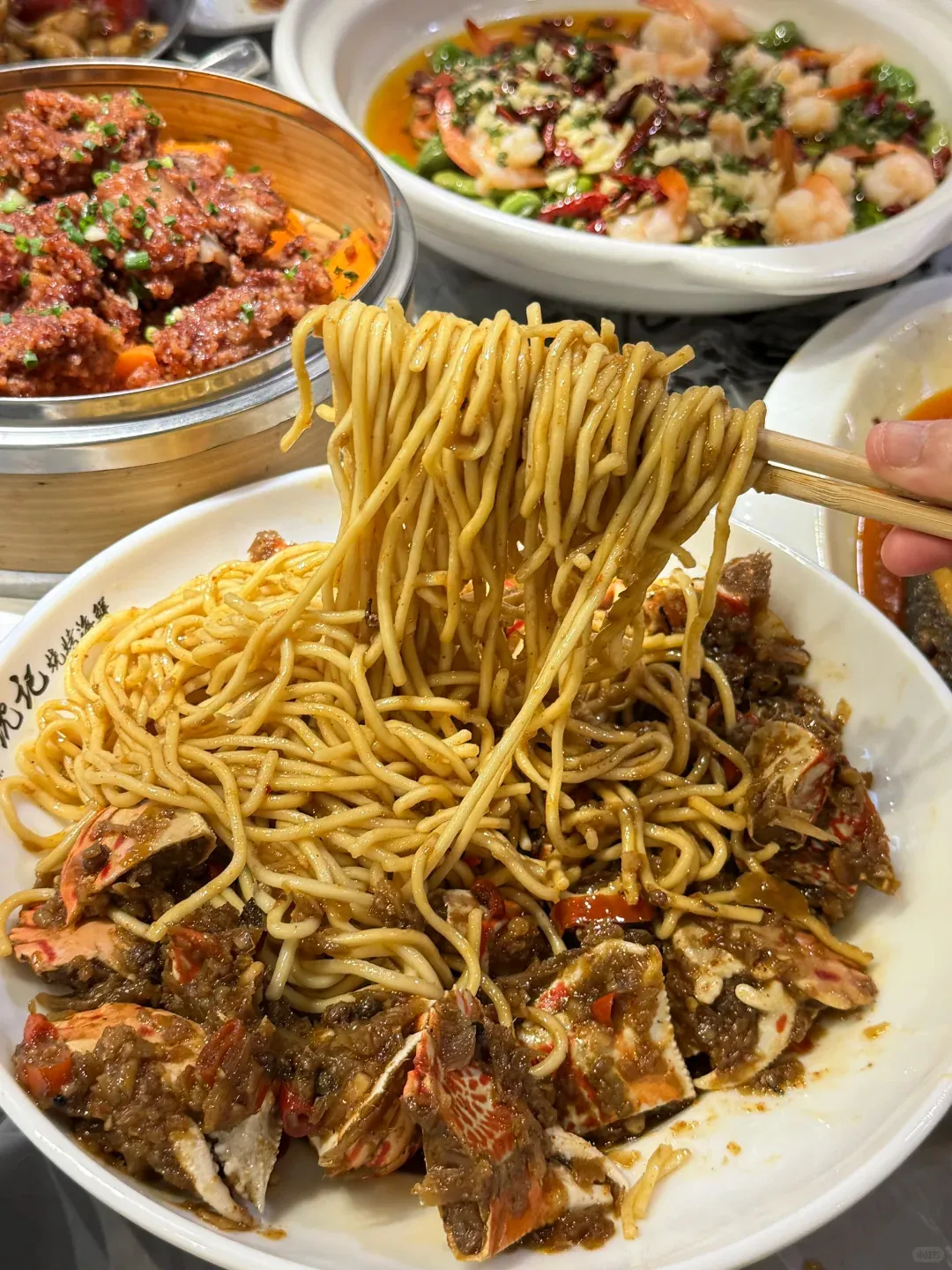
The spice — three levels, and not just "hot"
Here's the part people get wrong about this dish. It comes in three spice levels — 微辣 (mild), 中辣 (medium), and 特别辣 (extra spicy) — but ordering the top one isn't a dare, it's a flavor choice. The heat isn't the point; the taste is. The chili is there to lift the garlic and the crab, not to punish your tongue. Mild is gentle and lets the crab sweetness come through; medium is the everyday happy place; extra-spicy is for people who want the chili to hum in the background the whole time they eat. I tried medium, and the bowl was genuinely delicious — savory, garlicky, a little numbing from the heat, with the crab flavor soaking into every strand. This is the kind of spice you actually enjoy, not the kind you survive.
The sizes — only two, and no small
Shen Ji only sells this in two sizes, and there is no small one. 中份 (medium) is built for two to three people; 大份 (large) is for four to five. This is a share-at-the-table dish, not a solo lunch. The first time I saw the medium arrive I understood why — it's a mountain of noodles under a glossy red sauce studded with crab claws, easily enough to slow you down for half an hour. If you're alone or a pair, medium is plenty; if you're a bigger group, get the large and let everyone dig in. Ordering is simple: point at the bowl at the next table, hold up two or five fingers for the size, and say your spice level. Nobody expects English, and nobody needs it.
How to get there
Shen Ji sits on Xuesong Road (雪松路) in Hankou, part of the legendary 万松园 (Wansongyuan) food street — the same strip as the famous Xia Shi Shaguo soup shop a few doors down. The easiest way by far is a taxi or didi: show the driver 雪松路44号 or just say 沈记烧烤 and they'll know it, dropping you right at the door. Walking from the nearest metro is doable but it's a fair stretch, so a taxi simply saves your legs and your appetite. If you'd rather navigate yourself, just search "沈记烧烤" in your map app and follow the pin — the shop has been there for years and the pin is accurate. Come by car, and the whole fuss of finding it disappears.
The experience
Walking in, the first thing you notice is that almost nobody in the room is a tourist. It's students, couples, families, and groups of friends who clearly do this often. You order at the counter, take a number, and within minutes a bowl the size of a small washing basin lands in front of you, steam carrying garlic and chili across the table. Mix it — the sauce pools at the bottom, so stir hard until every strand glistens. Then the crab: the claws are meaty, and part of the fun (and the mild challenge) is cracking them open to get at the sweet meat inside, which you then drag through the noodles. It's messy, communal, and completely addictive. The garlic is the secret — fragrant, not bitter, the kind that makes you keep reaching for one more claw. By the end your hands smell like crab and chili, and you won't care at all.
Why it's the real thing
This is not a restaurant that polished itself for visitors. It's a working local eatery with battered tables and a constant turnover of regulars, and the crab foot noodles are the one dish everyone orders. On the review apps it pulls thousands of ratings at a strong score, but the better signal is the room itself: a place this busy, this full of neighbors, isn't performing for anyone. The food is doing the talking. As one regular put it, the crab-noodle craze in Wuhan basically started here — and tasting it, you get why a whole city adopted the idea. When locals guard a dish this tightly, you know it's the genuine article.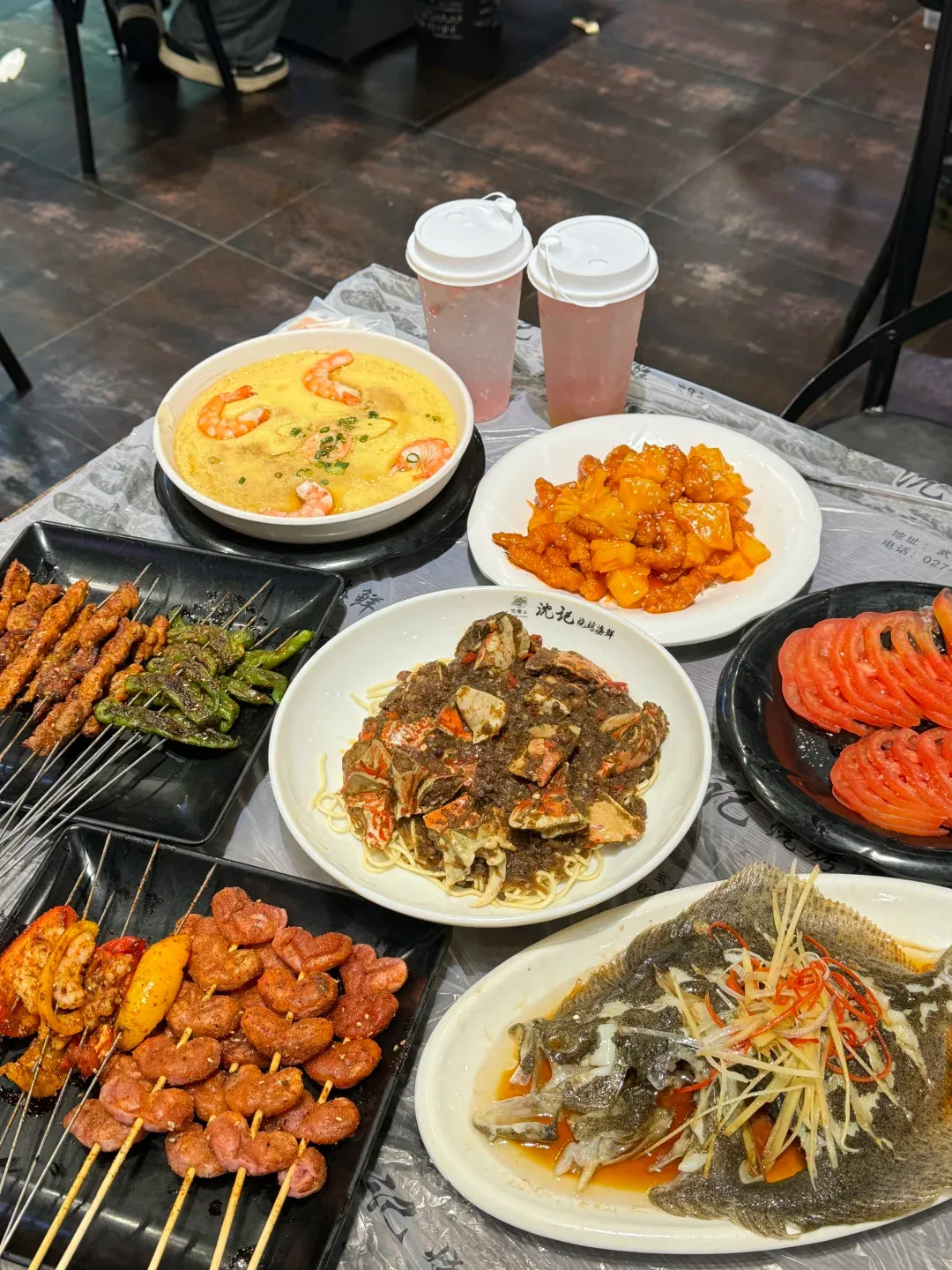
Practical tips
- Hours: long — roughly 11:30 in the morning to past 1:30 at night — so you can come for a late lunch or a midnight bowl.
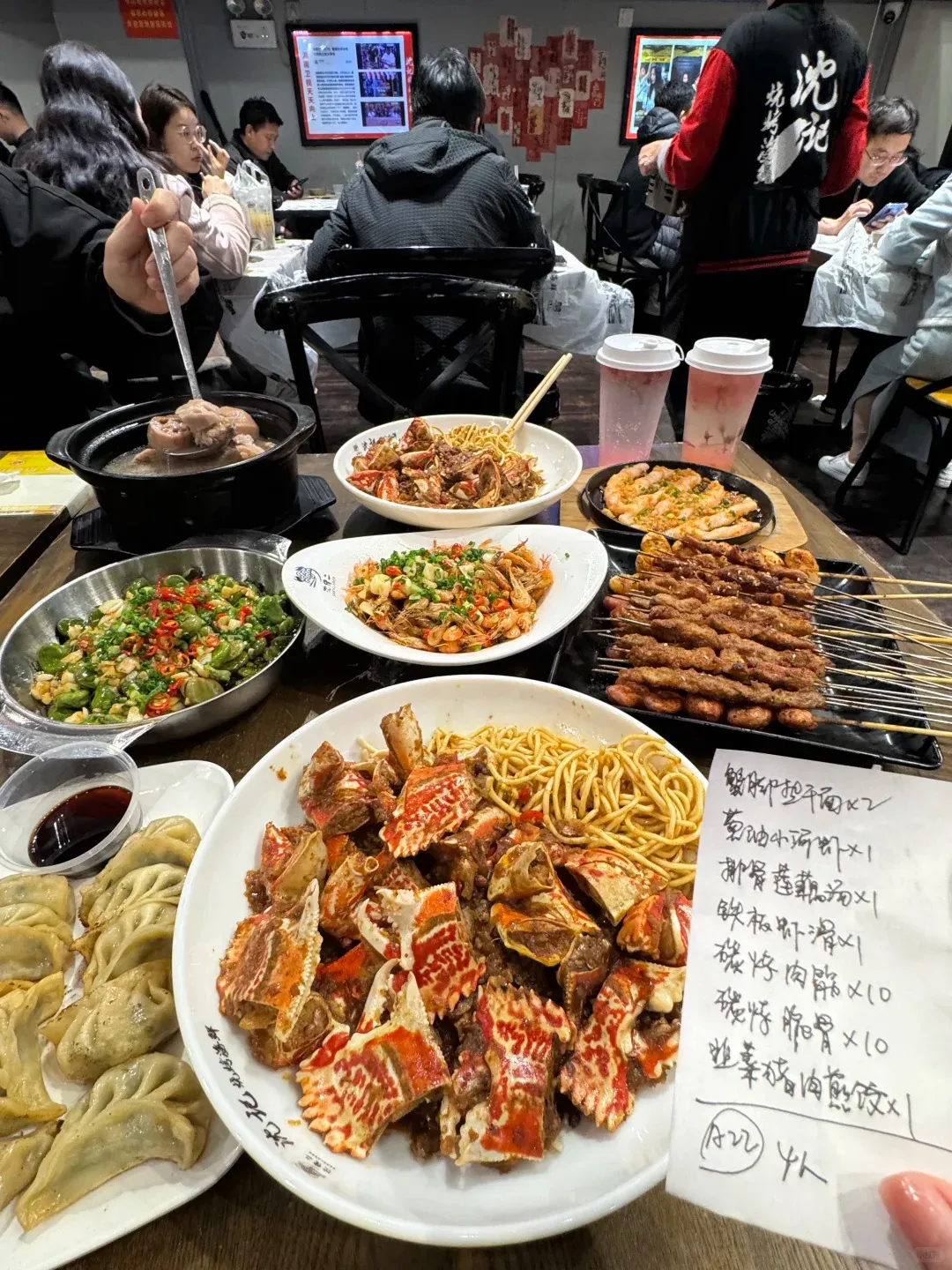
- Price: the crab foot noodles run around ¥48–68 a portion depending on size, and average spend per person lands near ¥70–80 once you add a few skewers from the grill.
- No small size: come with at least one other person, or be ready to take leftovers home.
- Cracking the claws: ask for a crab pick or just use your hands — that messy, hands-on part is the intended experience.
- Ordering: English isn't needed and isn't expected; pointing and holding up fingers works perfectly.
- Payment: both cash and mobile pay work.
The short version
Take a taxi to 44 Xuesong Road in Hankou and walk into Shen Ji Barbecue. Order the crab foot hot dry noodles — medium for two or three, large for four or five — pick your spice (mild, medium, or extra-spicy; it's about flavor, not just fire), mix it hard, crack the crab claws, and eat it with people you like. It's a Wuhan-only bowl you can't get anywhere else, and it's exactly as good as the locals say.
Lu Ji Hot Dry Noodles (卢记热干面)
Most Wuhan hot dry noodles guides point you to the famous chains with English menus and photo boards. Lu Ji Hot Dry Noodles (卢记热干面) is the opposite — and it's the bowl I'd send you to if you want to eat the way people who actually live here eat.
Where to find it
Lu Ji sits on Hongda Lane (洪达巷) in Hongshan District (洪山区), and it's about as easy to reach as a noodle shop gets. Take Wuhan Metro Line 11 to Mafangshan Station (马房山站), leave at Exit A, and the shop is roughly 20 meters away — a few steps down the lane, impossible to miss once you're out of the station. No taxi bargaining, no long walks. I came straight off the train on my first visit and was stirring a bowl within ten minutes of stepping onto the platform.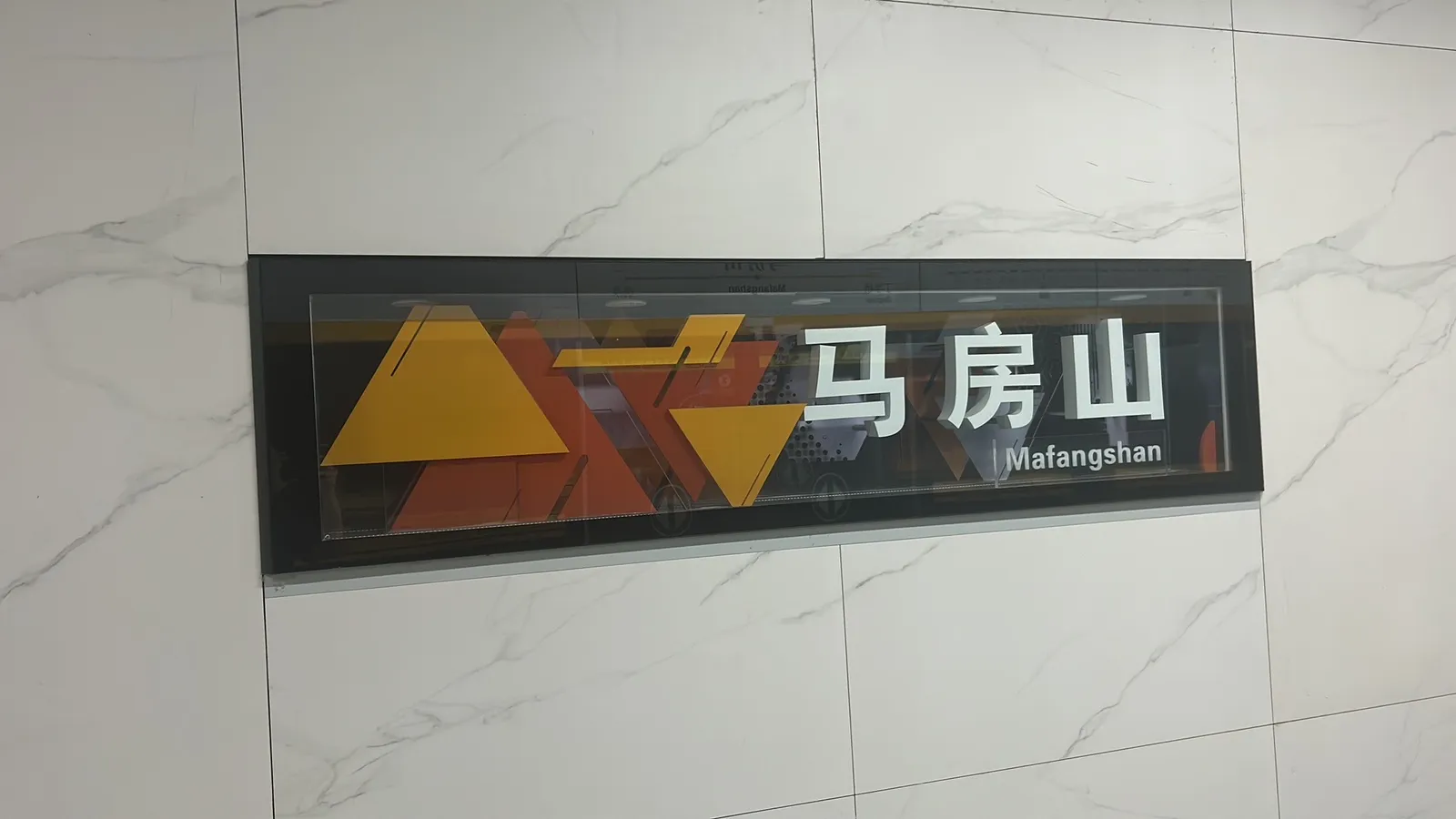
Why locals pack it
The place is small. A few low tables, a worn counter, plastic stools, and a constant rotation of regulars who clearly eat here most mornings. No decor, no "Wuhan famous snack" banner, no tourist-friendly menu. What you get instead is a steady stream of neighbors — students, office workers, retirees — grabbing a bowl and either slurping it on the spot or leaving with a takeaway tub. That's the real signal: when a plain little shop this busy is full of people who aren't visitors, the food is doing all the talking.
The bowl itself
A proper Wuhan hot dry noodles isn't a soup — it's springy noodles tossed in a thick sesame paste (芝麻酱) until they glisten. At Lu Ji the noodles come out firm, never soggy, coated in a deep, nutty sesame sauce with black pepper, scallion, and a little pickled vegetable (榨菜) for crunch. You mix it yourself at the table. Stir hard, because the sauce pools at the bottom, until every strand is glossy, then eat it fast before it cools and clumps. The first bite is pure toasted sesame; by the last, the chili oil has caught up and your lips tingle. Filling, almost free, and the most "Wuhan" ten minutes you'll spend in the city.
How to order without stress
Point at what the person ahead of you is having, or say "热干面" (rè gān miàn) and hold up one finger. Most orders are a single bowl, maybe one extra topping. Pay at the counter, take your number, and watch for your bowl on the pickup slot. Cash works; phone payment works too. English isn't needed and isn't expected.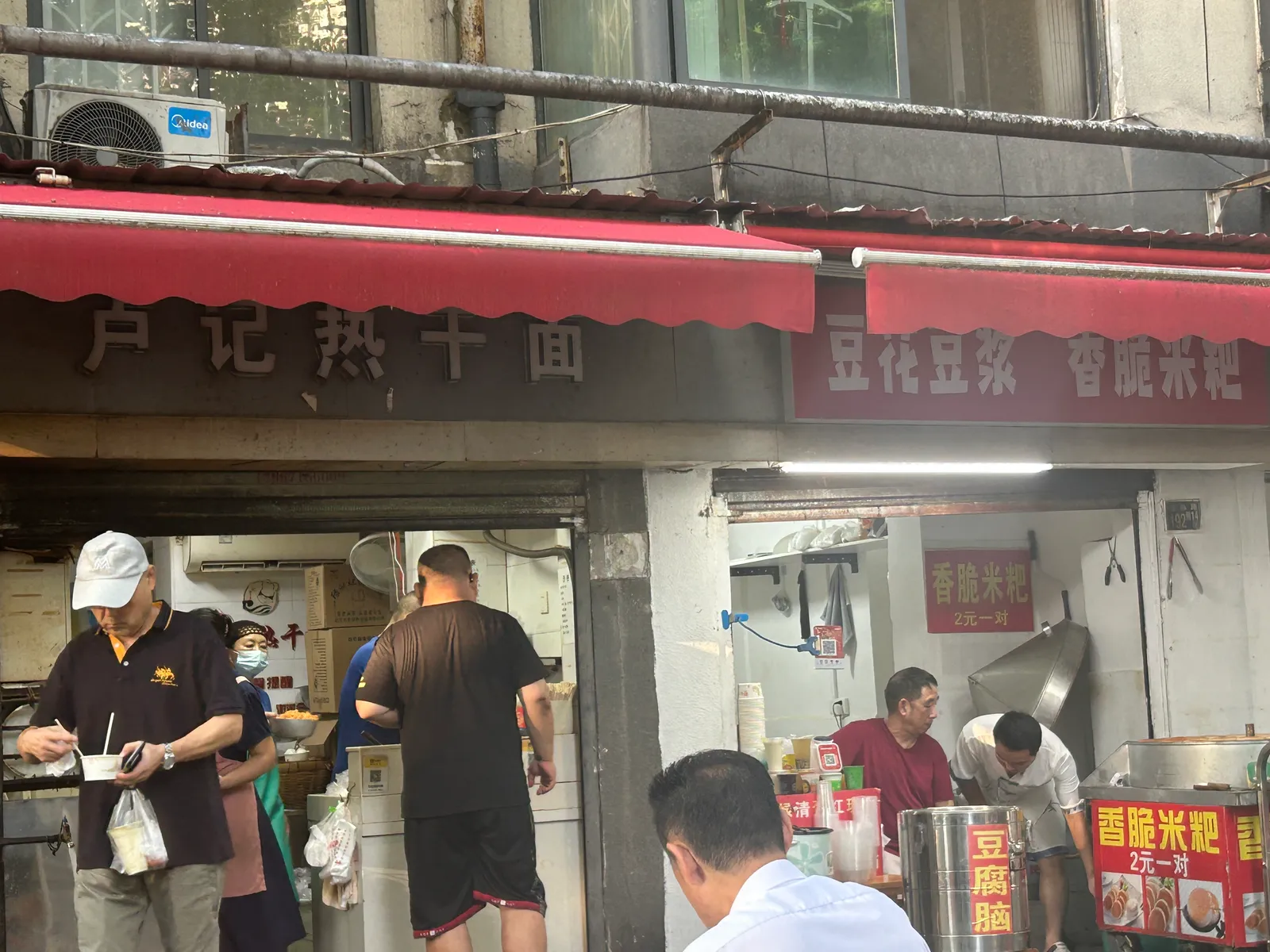
The short version
Metro Line 11 to Mafangshan, Exit A, 20 meters down Hongda Lane in Hongshan. Lu Ji Hot Dry Noodles — tiny shop, all locals, real sesame-paste noodles. Stir and eat fast. Skip the famous chains; this is the bowl the neighborhood actually eats.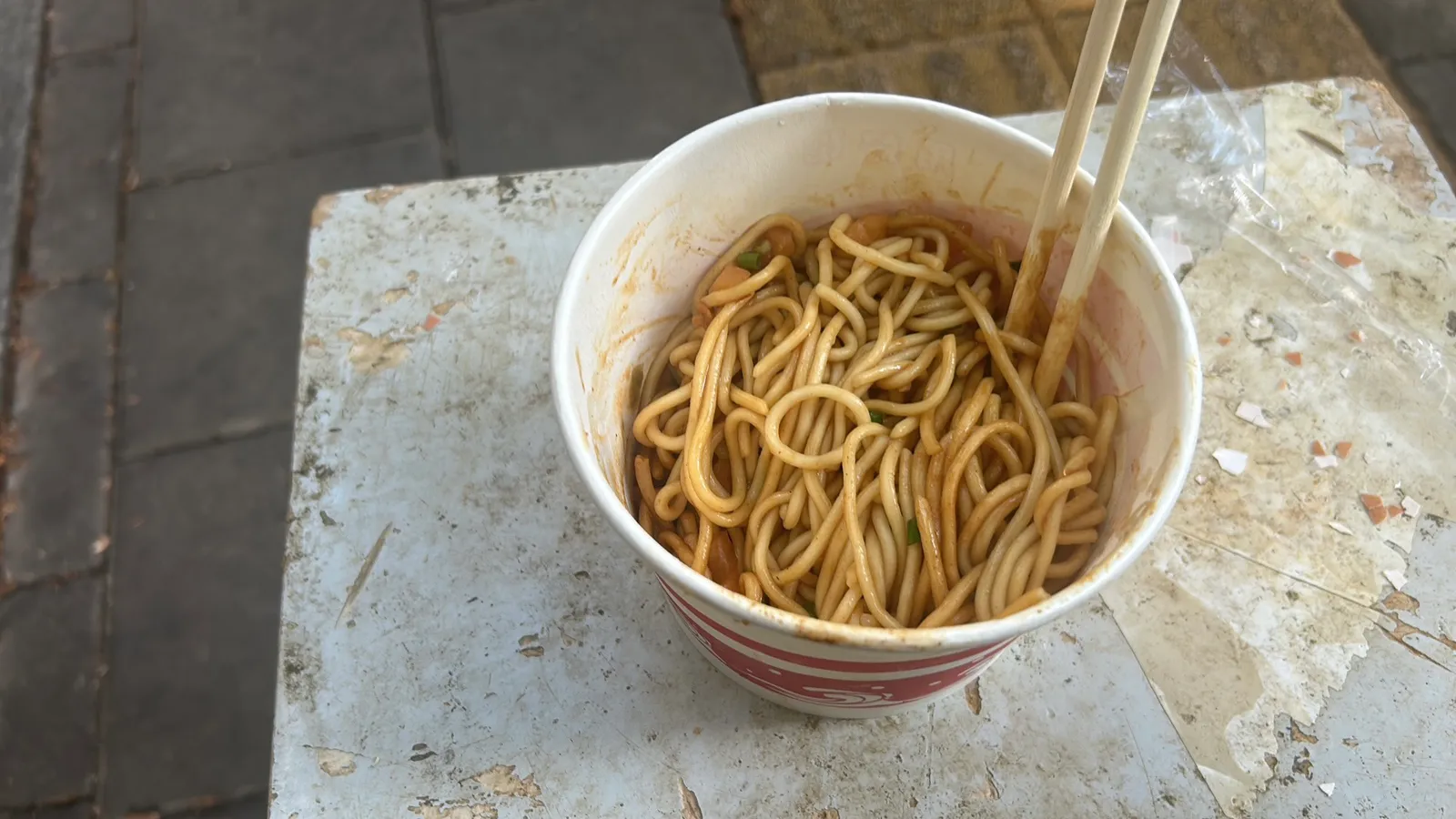
Xia Shi Shaguo: Wuhan's Famous Lotus Root & Pork Rib Soup (夏氏砂锅莲藕排骨汤)
There's a bowl of soup in Wuhan that people will line up for more than an hour to eat. It comes from a cramped, decades-old shop on Xuesong Road called 夏氏砂锅 (Xia Shi Shaguo), and the dish is 莲藕排骨汤 — lotus root slowly simmered with pork ribs. I went for that one soup, and it turned out to be one of the most comforting things I ate in the city.
The dish that made me queue
Wuhan takes its soups seriously. The local word is 煨汤 (wēi tāng) — a slow-fired soup built over a low flame for hours — and it's less a recipe than a weekend ritual, a way families show care. Ask where to eat a proper bowl of Hubei food and a certain name keeps coming up: 夏氏砂锅, Xia Shi Shaguo, on Xuesong Road. Locals call it the "queue king" (排队王) of the street, and the bowl everyone lines up for is the lotus root pork rib soup. I went once, on a cold evening, and understood the fuss by the second spoonful.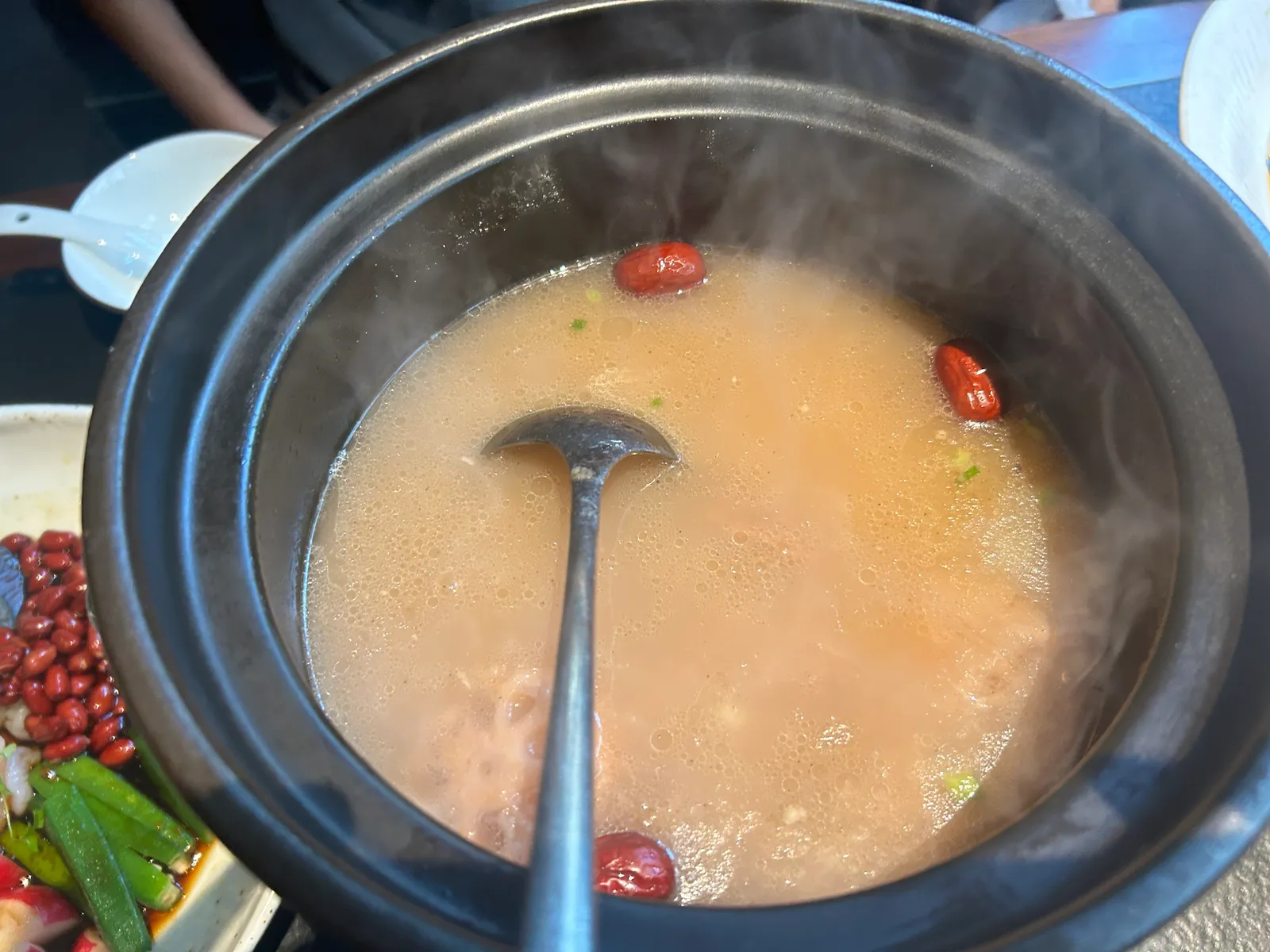
What is lotus root pork rib soup?
莲藕排骨汤 (lián ǒu pái gǔ tāng) is a Hubei staple: pork ribs, lotus root, water, and time. There's no cream and no thickener — the body of the soup comes from the lotus root itself. As it simmers, the root releases its starch into the broth, turning it deep golden and almost milky. At Xia Shi the ribs are big, meaty chunks braised until the meat slips off the bone, and the broth is rich enough that you keep reaching for one more bowl long after you're full.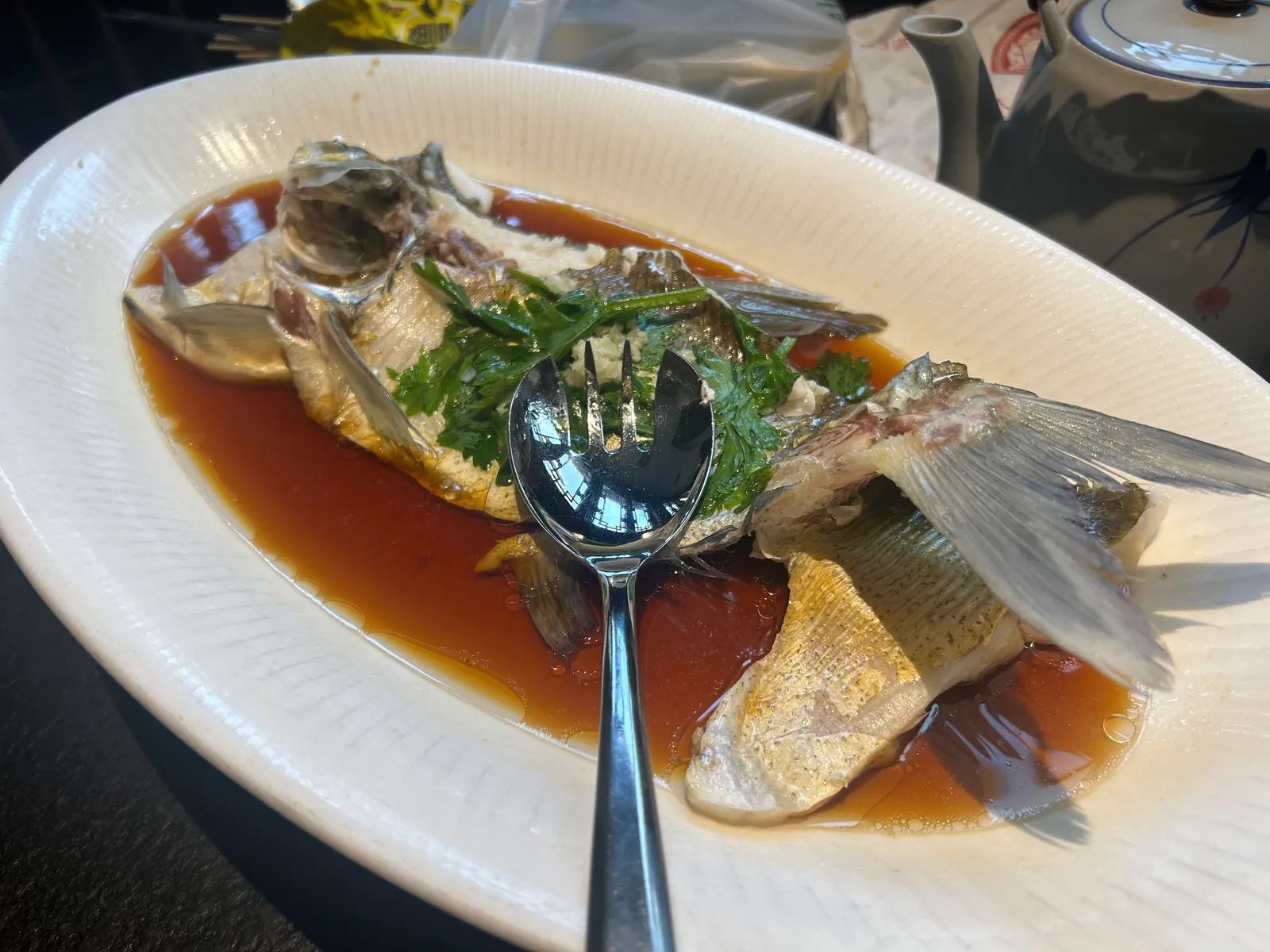
The texture you're looking for: 拉丝 (stringy)
Here's the part most first-timers miss. China has two kinds of lotus root. 脆藕 (cuì ǒu) is the crisp, high-water kind you meet in stir-fries — it snaps clean. 粉藕 (fěn ǒu) is the starchy, "floury" kind used for slow-cooked soups. Xia Shi uses the starchy kind, and after hours of simmering it turns soft, faintly sweet, and develops that signature 拉丝 texture — you lift a piece and it pulls into threads, like melted cheese. That stringy, chewy, almost silky bite is the real sign you're eating proper Wuhan lotus root soup. If your lotus root cracks with a crunch, you're eating the wrong root. Xia Shi's gets it exactly right: 糯到拉丝, fragrant, and impossible to stop eating.
Why Xia Shi Shaguo's version stands out
The shop has been around for more than forty years. It moved to Xuesong Road in 2001 with just six tables and was packed from day one; today it seats well over a hundred and the wait can still run from early evening to midnight. On Dianping it sits at around 4.7 across more than 20,000 reviews — not a fluke. Ask a regular and many will tell you, without hesitation, that this is the best bowl of lotus root pork rib soup in Wuhan. The broth is golden and almost creamy, the ribs fall off the bone, and the 粉藕 is cooked until it pulls apart in threads. That combination — hometown recipe, relentless consistency, and a room full of locals who aren't tourists — is exactly why the line forms every single night.
How to get there
Xia Shi Shaguo is at 73 Xuesong Road (雪松路73号), in the Jianghan District, part of the famous 万松园 (Wansongyuan) food street — one of Wuhan's most legendary eating strips. Getting there:
- Taxi / didi — easiest. Show the driver 雪松路73号 or just say "夏氏砂锅" and you'll be dropped at the door. Walking from the nearest metro is doable but it's a fair stretch, so a taxi simply saves your legs.
- Metro: take Line 7 to Qushuilou Station (取水楼站), leave at Exit A2, then it's about a 500-meter walk into the lane.
- Map app: the lazy option — just search "夏氏砂锅" and follow the pin.
The timing secret: get there before 5 PM
This is the one tip that saves your whole night. Arrive before 5 PM. After five, the dinner rush hits and tables turn roughly once every 1.5 hours (翻台) — which means if you show up late, you're looking at about a 90-minute wait just to be seated, before you've eaten a thing. Regulars describe the line stretching from early evening to midnight, and even Wuhan's own tourism board tells visitors to come before 5 if they don't want to queue. The pro move: turn up around 4:30, sit the moment they open at 5, and order before the room fills. Your future self will thank you.
What else to order
The soup is the headliner, but the rest of the menu is genuinely strong:
- 锅边馍 (guō biān mó): a rustic clay-pot "edge bread" — crispy at the rim, soft and faintly sweet in the middle. Nearly every table orders it.
- 夏氏一锅香 (one-pot wonder): bullfrog, eel, squid and quail eggs in a rich clay pot. Huge portions, great over rice.
- 风干鸡炖莴苣 (air-dried chicken with lettuce): the broth is light but layered, a nice break from the heavier dishes.
- 酱油炒饭 (soy fried rice): finished with lard, grains separate — the perfect thing to soak up the last of the soup.
Heads up: portions are big. If you're a small group, don't over-order the way I did.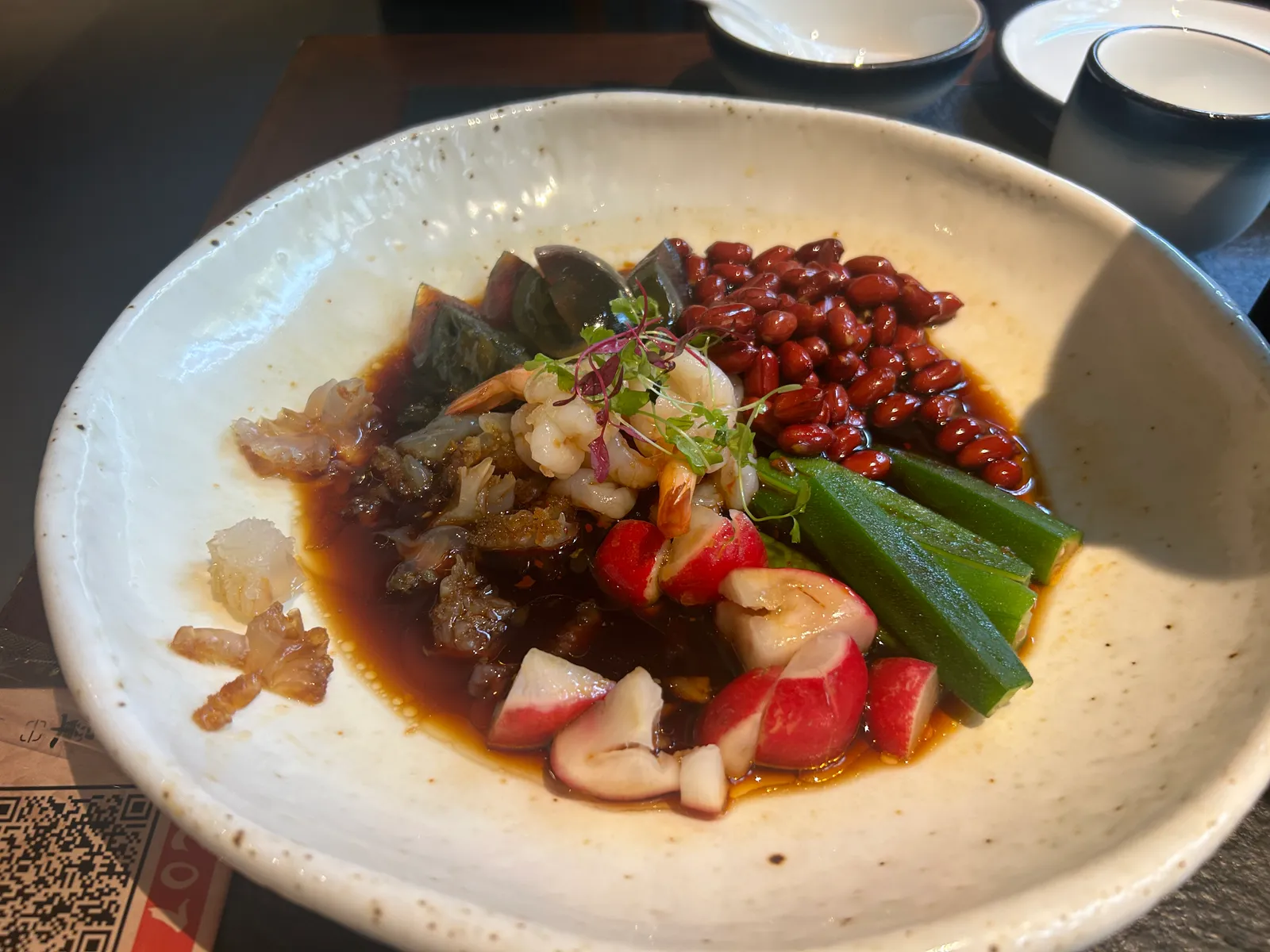
Practical tips
- Hours: lunch 11:00–14:00, dinner 17:00–02:00 (yes, open till 2 AM).
- Average per person: around ¥90–100.
- Spice: several dishes are 鲜辣 (fresh-spicy); tell the server if you want it milder.
- Ordering: by iPad or scan-to-order; English isn't needed and isn't expected.
- Payment: both cash and mobile pay work.
FAQ
Is it really worth the queue? For the soup, yes — and if you arrive before 5 PM you'll barely wait at all.
Can I take the soup to go? Sometimes, but the experience is the sit-down bowl; the clay pot keeps it hot at the table.
Is it just for tourists? It's famous, but the room is full of locals — that's the whole point, and the best sign the food is real.
Anything for a non-pork eater? The signature soup is pork-based; ask about veg sides like 炝生菜 (quick-boiled lettuce) if you want to skip the meat.
The short version
73 Xuesong Road, by taxi or Metro Line 7 to Qushuilou Exit A2. Get there before 5 PM. Order the lotus root pork rib soup first, pull the lotus root apart to watch it stretch, and don't skip the 锅边馍. That stringy, soul-warming bowl is the taste of Wuhan — and the reason the line forms every night.
Yellow Crane Tower: My Step-by-Step Visit — How to Get There, Buy Tickets & the Route
Before I went, someone told me the Yellow Crane Tower (黄鹤楼) was "just a reconstruction" and I almost skipped it. I'm glad I didn't. Here is exactly how my visit went — how I got there by metro, how I bought the ticket, how long it took, and the route I walked from the moment I stepped through the gate to the view that made the whole trip worth it.
How to get to Yellow Crane Tower

The easiest way is the metro. Take Wuhan Metro Line 5 to Simenkou (Yellow Crane Tower) Station — 司门口黄鹤楼站. Get out at Exit C. The moment you come up the escalator and turn around, you'll see the famous red wall (网红红墙) with the tower framed perfectly in the background. It's a free photo spot, and honestly it's the best outside shot you'll get of the whole building, so don't rush past it — give it a minute. People line up here for the picture with the tower peeking over the wall, and the wall itself has become a little landmark of its own.
From Exit C, it's about a five-minute walk to the West Gate (西门). You just follow the pedestrian street, and you'll see clear signage pointing toward the entrance. Follow the signs (按提示牌走), and within roughly five minutes you're walking up to the main gate on foot. No taxi needed, no confusing map app, no touts to dodge. That short walk is pleasant — you pass small shops and local life, and the tower grows in front of you with every step. I liked this approach more than I expected: it builds the anticipation, and by the time the West Gate appears you're already in the mood for it.
If you're coming by DiDi or taxi instead, show the driver the characters 黄鹤楼 and ask to be dropped at the West Gate. English names don't always register in the apps, so the Chinese characters matter more than the English.
How long does the whole visit take?
Plan for the whole trip to take about two to three hours. Roughly 40 minutes of that is getting there and queuing at the gate, and around two hours is inside the park itself. I'll break the timing down as we go, because knowing the clock helped me relax and actually enjoy it instead of rushing.
How to buy the ticket
At the gate, the ticket costs 70 RMB for adults, and children get in at half price. Bring the ID or passport you used for the booking, because entry is real-name — they check it against the ticket. On busy days it's worth booking ahead through the official account or a major travel platform, so you're not standing in a queue at the window. Buy through the official channel or a major travel platform rather than from anyone offering tickets at the entrance; there are sometimes people outside promising "deals" that aren't worth the risk. Note that the daytime ticket and the separate evening light show ("Night at Yellow Crane Tower") are different products — if you only want to climb the tower and see the view, the daytime ticket is the one you need.
Opening hours are roughly 8:30 to 18:00, with last entry around 17:20. If you can, arrive right at the 8:30 opening: the light is soft, the air is cooler, and you'll beat the big tour groups that pour in after 10:00. Once your ticket is scanned, you're through the gate — and this is where the real visit begins.
Where to start: the West Gate route
Start at the West Gate and follow the path inward. The route is well signed, so you won't get lost. The first things you meet are the Shengxiang Pagoda (胜像宝塔) — a Yuan-dynasty stone pagoda sitting right inside the entrance — and then the "Yellow Crane Returns" bronze statue (黄鹤归来铜雕), a sculpture of the mythical crane coming home. These are quick stops, two or three minutes each, and they set the scene before the main event. Take the photos here; the light on the pagoda in the morning is lovely.
Then you reach the main tower itself. This is the building everyone came for, and this is where you start the climb.
Climbing the tower, floor by floor

Don't rush the climb — the tower is built so that each floor rewards the next. Here's what I found on each level, going up:
| Floor | Highlights & Key Features |
|---|---|
| 1st Floor | Giant mural "White Clouds and Yellow Crane" (白云黄鹤), plus stone-carved poems in the entrance hall. |
| 2nd Floor | Dynastic models of the tower and famous Cui Hao / Li Bai poems carved in stone. |
| 3rd–4th Floors | Calligraphy and painting exhibits, literary inscriptions across centuries. |
| 5th Floor | 360° panoramic observation deck over the Yangtze River. |
The top floor: finding the immortal's feeling

Here's the part I want to insist on: you must go all the way to the top. If you climb the Yellow Crane Tower and stop on the third or fourth floor, you've missed the entire reason to come. Stand on the fifth-floor deck and look out.
The Yangtze River rolls west to east below you. The 1957 bridge stitches the two banks together. The three towns of Wuhan — Wuchang, Hankou, Hanyang — spread out in every direction. On a clear day the view goes on and on, and you finally understand why poets kept coming back to this exact hill.
Practical tips summary
| Category | Practical Recommendation |
|---|---|
| Best Time | Arrive right at 8:30 opening to avoid tour groups (10:00–15:00 peak). |
| Stairs / Lift | Elevator is reserved for elderly and pregnant visitors; take the stairs. |
| Audio Guide | Use the free official audio guide on your phone instead of renting devices. |
Bullet Trains and Subways in China: The Ultimate Transport Guide
Direct answer: Buy China train tickets with the same passport you will carry to the station. China Railway accepts foreign passports for real-name ticketing, and stations provide manual verification when an automated gate cannot read a document. For city transport, prepare Alipay or a local ticket option, then confirm your destination city's rules in the app.
Direct answer: Buy China train tickets with the same passport you will carry to the station. China Railway accepts foreign passports for real-name ticketing, and stations provide manual verification when an automated gate cannot read a document. For city transport, prepare Alipay or a local ticket option, then confirm your destination city's rules in the app.
Checked August 25, 2026. Ticket sales windows, station equipment, card acceptance and city transport features can change.
Choose the right way to book
| Booking route | What it is good for | What to verify before paying |
|---|---|---|
| 12306, China Railway's official service | Official timetable, ticket and change/refund rules. | Your passport profile is correct, the train is on sale, and the payment method works for your account. |
| Trip.com or another travel platform | An English booking flow that some international travellers prefer. | Its service fee, refund rules and the exact passenger passport details before checkout. |
| Station ticket counter | Human help if an online booking or document check fails. | Allow extra time and carry the original passport used for the booking. |
Check Beijing–Shanghai train times on Trip.com (affiliate link) → For the non-affiliate source of record, confirm live train availability, passenger details, fare and change conditions on China Railway’s official 12306 service before paying.
Book and board without a paper-ticket assumption
| Stage | Action | Why |
|---|---|---|
| Book | Enter your full name and passport number exactly as shown on the physical passport. | China Railway uses real-name ticketing; mismatched identity details can stop boarding. |
| Before travel | Save the booking reference and check the departure station, not only the city name. | Large cities can have several railway stations far apart. |
| At the station | Carry the original passport. Use an automated gate if it accepts your document; otherwise use the staffed manual channel. | Official local guidance says foreign passengers may use a passport at an automatic machine or present it at manual inspection. |
| If something fails | Go to the ticket counter or station staff with your passport and booking details. | Do not rely on a screenshot alone as a substitute for the identity document. |
Use the subway with a fallback
| Situation | Practical action | Fallback |
|---|---|---|
| Before arriving | Bind an eligible international card to Alipay if your card issuer and account pass verification. | Carry a small cash reserve and check the city metro's own ticket options. |
| At the station | Open Alipay and check whether a transport function is available for that city. | Use a single-ride ticket, transport card or staffed ticket desk where offered. |
| Using a QR code | Read the city-specific instructions in the app before entering a gate. | Do not assume one city's transport QR code is automatically valid in another city. |
Common mistakes
| Mistake | Fix |
|---|---|
| Going to “Beijing station” without checking the full station name. | Match the station shown in your booking with your map route the day before travel. |
| Trying to board with a passport copy or a different passport. | Bring the original valid passport used for the booking. |
| Assuming every foreign passport must use the same gate. | Look for the staffed channel if the automated gate does not accept your document. |
| Assuming a foreign card works identically in every metro system. | Check the city function in Alipay and keep a local ticket fallback. |
Sources checked
| Source | What it supports | Checked |
|---|---|---|
| China Railway 12306 | Official train-ticket rules and service information. | Aug. 25, 2026 |
| Shanghai government: train boarding | Foreign passport use at automated and manual ticket inspection. | Aug. 25, 2026 |
| Alipay international visitor guidance | International-card binding and access to ride-hailing and public-transport services. | Aug. 25, 2026 |
Surviving the Great Firewall: The 2026 Guide to Internet and VPNs in China
Direct answer: Set up your connection before your flight. An international-routing eSIM can be the simplest mobile-data option, but only buy a China plan whose provider explicitly confirms that routing. If you also need hotel Wi-Fi for work, install and test a VPN before departure; availability can change without notice.
Direct answer: Set up your connection before your flight. An international-routing eSIM can be the simplest mobile-data option, but only buy a China plan whose provider explicitly confirms that routing. If you also need hotel Wi-Fi for work, install and test a VPN before departure; availability can change without notice.
Checked August 26, 2026. Prices, routing and provider availability can change, so confirm the exact plan in the provider app before payment.
Pick the connection that matches your trip
| Option | What is verified | Important limit | Best use |
|---|---|---|---|
| International-routing travel eSIM | Airalo states that its China, Asia and Global eSIM products use international data routing and do not require a VPN for its covered service. | This is a provider-specific claim, not a rule for every China eSIM. Check device compatibility, plan coverage and fair-use terms. | Short visits where you want mobile data immediately after landing. |
| Home-carrier roaming | Your own carrier may provide a roaming data option without changing SIMs. | Price, speed and app access depend on your carrier and package. | Keeping your home number active for calls or one-time codes. |
| Local SIM or hotel Wi-Fi plus VPN | A VPN can be prepared before travel for use on local connections. | Connection success is variable. Do not treat one provider or one server as guaranteed. | Laptop-heavy trips where you have tested your own setup first. |
Tools travelers commonly compare
| Need | Names worth checking | How to use this list |
|---|---|---|
| Mobile data with documented international routing | Airalo China, Asia or Global eSIM plans | Airalo documents international routing for its listed China-coverage plans. This is provider-specific, so read the exact plan terms before payment. |
| VPN for local Wi-Fi or local data | Surfshark, NordVPN, ExpressVPN, Astrill | These names appear in a current independent China VPN comparison. Test the option you choose before travel; no provider can be promised to work on every network. |
| Names you may see in forums | LetsVPN and others | Traveler reports can conflict from week to week. Do not buy a long subscription or rely on one option only because it is popular in a forum. |
Checked August 26, 2026. The safest practical setup is documented mobile data plus offline maps and bookings; add a tested VPN only if your trip needs it.
Before you leave home
| When | Do this | Why it matters |
|---|---|---|
| Before purchase | Check that your phone is unlocked and eSIM-compatible. Read the China plan's routing, data and hotspot terms. | Some plans are data-only and not every China plan has the same routing. |
| On home Wi-Fi | Install the eSIM, label it clearly and save the provider's support instructions offline. | You avoid finding an installation page after landing with no working connection. |
| Before boarding | If you need a VPN on local Wi-Fi, install it on every device and test login, recovery email and two-factor authentication. | Provider sites and authentication flows can be difficult to reach once you are already in China. |
| On arrival | Select the travel eSIM for mobile data and follow that provider's activation instructions, including roaming if required. | Do not activate a plan early unless its validity terms say that installation will not start the clock. |
What not to promise yourself
| Common trap | Better rule |
|---|---|
| “Every eSIM bypasses restrictions.” | Only rely on the written routing statement for the exact plan you are buying. A local-data eSIM and an international-routing eSIM are not the same product. |
| “One VPN will work everywhere.” | Prepare it before travel and keep an independent mobile-data option. Check the provider's current China guidance close to departure. |
| “Data means I have a Chinese phone number.” | Many travel eSIMs are data-only. Keep your normal SIM available if you may need calls or SMS codes. |
| “An old price is still the price.” | Use the provider checkout page as the final price and record the date you checked it. |
Quick questions
| Question | Answer |
|---|---|
| Can I install an eSIM before China? | Airalo says its eSIM can be installed in advance outside the coverage area, then connected after arrival. Follow the validity policy shown for your purchased plan. |
| Do I still need a VPN with mobile data? | Only your exact data plan can answer that. If its provider documents international routing, test the apps you need after activation; do not rely on a general internet claim. |
| What is the safest backup? | Keep a copy of key bookings and addresses offline, retain access to your home number where possible, and save support contacts before the flight. |
Sources checked
| Source | What it supports | Checked |
|---|---|---|
| Airalo: China access and routing | Airalo's statement about international routing for its listed China coverage products. | Aug. 26, 2026 |
| Airalo China plans | Current plan options, compatibility and checkout pricing. | Aug. 26, 2026 |
| TechRadar: China VPN comparison | Independent 2026 comparison that includes Surfshark, NordVPN, ExpressVPN and Astrill, while noting that effectiveness changes over time. | Aug. 26, 2026 |